Compassion Fatigue vs. Burnout in Healthcare
Two terms that come up constantly in conversations about clinician well-being are burnout and compassion fatigue. They often occur together, and they're often used interchangeably, but they have different sources and respond to different kinds of help.
Burnout is exhaustion, cynicism, and reduced effectiveness caused by chronic workplace stress that hasn't been managed, such as heavy workloads, understaffing, and administrative burden. Compassion fatigue comes from repeated exposure to patients' suffering and trauma. Burnout usually builds gradually, while compassion fatigue can appear quickly, sometimes after a single event.
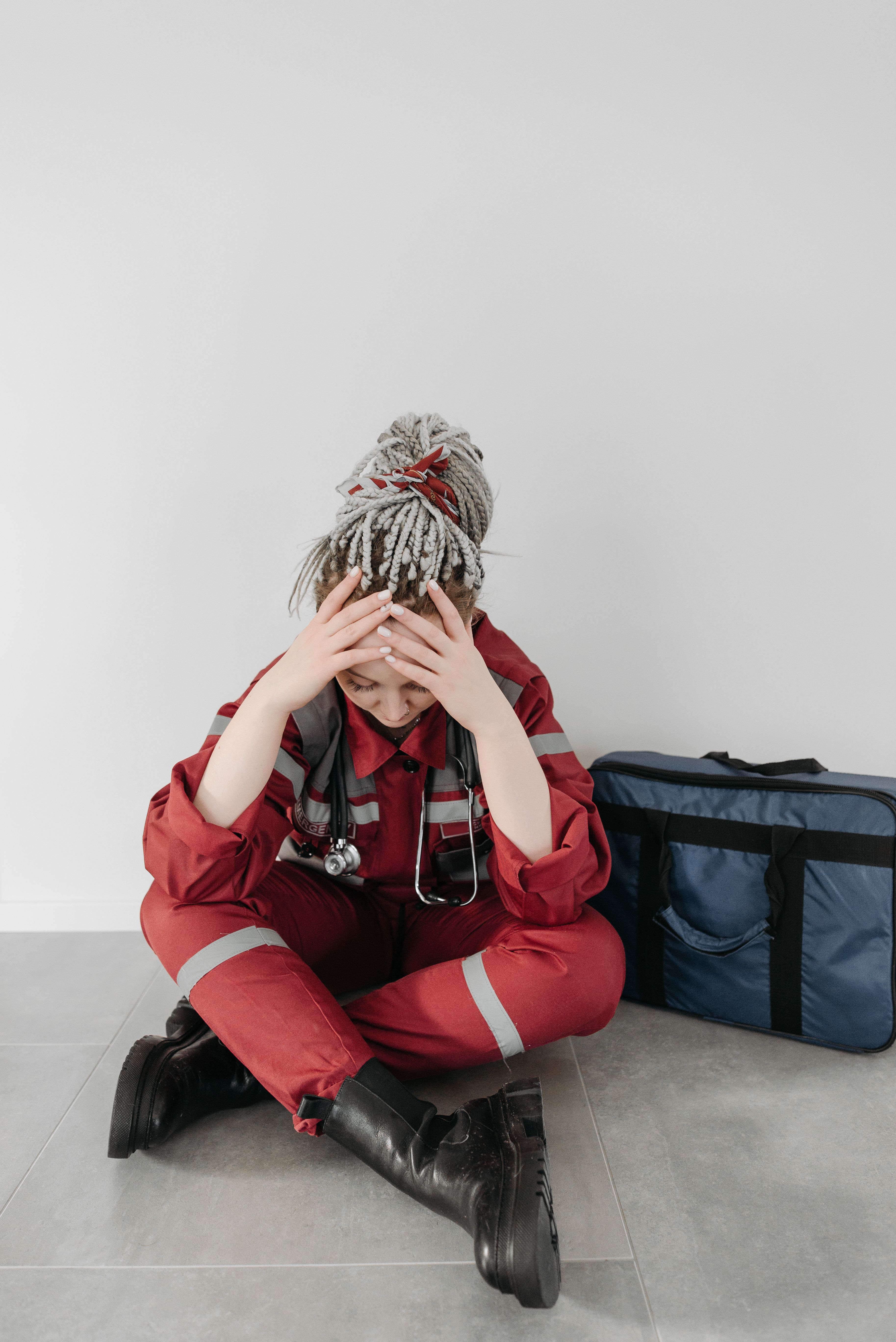
What is burnout?
Psychologist Herbert Freudenberger first described burnout in 1974. Today, the World Health Organization (WHO) defines it in the International Classification of Diseases (ICD-11) as a syndrome resulting from chronic workplace stress that has not been successfully managed. WHO classifies burnout as an occupational phenomenon, not a medical condition, and describes three dimensions:
- Feelings of energy depletion or exhaustion
- Increased mental distance from one's job, or feelings of negativism or cynicism about it
- Reduced professional efficacy
Researchers often measure burnout with the Maslach Burnout Inventory, which uses closely related dimensions: emotional exhaustion, depersonalization, and reduced personal accomplishment.
What causes burnout in healthcare?
Burnout is rooted in work conditions, not personal weakness. Common drivers include:
- Heavy workloads and understaffing. In a large study of Pennsylvania hospitals, each additional patient per nurse was associated with 23% higher odds of nurse burnout.
- Documentation and administrative burden. In a time-and-motion study of outpatient physicians, nearly two hours went to EHR and desk work for every hour of direct patient care.
- Little control over schedules, workflows, or policies
- Insufficient support from leadership or the organization
Also read: What Is Burnout Theory in Healthcare?

What is compassion fatigue?
Compassion fatigue is the emotional and physical toll of repeatedly caring for people who are suffering or traumatized. Trauma researcher Charles Figley helped popularize the term, describing it as a natural consequence of caring for others in distress.
Compassion fatigue is closely linked to secondary traumatic stress (STS), which is stress from secondary exposure to other people's traumatic experiences. It's related to, but not the same as, vicarious trauma, a term researchers use for longer-term changes in how a helper sees themselves and the world.
According to the manual for the Professional Quality of Life Scale (ProQOL), symptoms of secondary traumatic stress are usually rapid in onset and tied to a particular event. They can resemble post-traumatic stress, including intrusive thoughts and avoidance.
How do researchers define the relationship between the two?
- Many clinical articles compare burnout and compassion fatigue as two distinct conditions. That's useful for recognizing what you're experiencing.
- The ProQOL, one of the most widely used measures in this field, treats compassion fatigue as an umbrella with two parts: burnout and secondary traumatic stress.
Either way, the practical point is the same: workplace-driven exhaustion and trauma-driven distress are different experiences, and they need different kinds of help.
What are the key differences between compassion fatigue and burnout?
| Burnout | Compassion fatigue | |
|---|---|---|
| Main source | Chronic workplace stressors: workload, staffing, administrative burden, lack of control | Repeated exposure to patients' suffering, trauma, and death |
| Onset | Usually gradual, over months or years | Can be rapid, sometimes after a single event |
| Core experience | Exhaustion, cynicism, and feeling ineffective | Intrusive thoughts, emotional numbness, avoidance, heightened alertness |
| Relationship to the work | Frustration with the job, organization, or system | May still value the work but feel overwhelmed by the suffering witnessed |
| What tends to help | Changes to workload, staffing, and work systems | Peer support, debriefing, supervision, and trauma-informed mental health care |
Why are healthcare workers vulnerable to both?
Clinicians face both sources of strain at once: heavy workloads and administrative demands, plus regular contact with illness, injury, and death. When there's little time to recover from either, the effects can compound.
The COVID-19 pandemic showed how quickly this can escalate. In a national study by researchers from the American Medical Association (AMA), Mayo Clinic, and Stanford, the share of U.S. physicians with at least one symptom of burnout rose to 62.8% in 2021, a record high. By 2023 it had eased to 45.2%, still higher than in the general U.S. workforce.
Many clinicians also describe moral distress: knowing what care a patient needs but being unable to provide it because of system constraints such as staffing, time, or resources. Moral distress can feed both burnout and compassion fatigue.
Also read: Which Healthcare Professional Is at Highest Risk for Burnout?
What are the warning signs?
What are the signs of burnout?
- Exhaustion that rest doesn't fix
- Cynicism or detachment toward patients, colleagues, or the job
- Feeling ineffective or that your work doesn't matter
- Irritability, poor sleep, or getting sick more often
- Frustration directed at the organization or "the system"
What are the signs of compassion fatigue?
- Intrusive thoughts or images of distressing patient cases
- Emotional numbness at work or at home
- Avoiding certain patients, cases, or situations
- Feeling on edge or unable to switch off
- Difficulty feeling joy in your personal life
- A sense of powerlessness in the face of patients' suffering
When to get help: If symptoms persist, affect your sleep, relationships, or safety, or you have thoughts of harming yourself, talk to a mental health professional, your employee assistance program, or your primary care provider. In the U.S. and Canada, you can call or text 988 to reach a crisis line.
How can you prevent and recover from each?
What helps with compassion fatigue?
- Structured peer support and debriefing after critical incidents or difficult outcomes
- Regular clinical supervision or access to mental health professionals experienced with secondary traumatic stress
- Grounding and boundary-setting skills, such as mindfulness practices and short pauses between difficult encounters
- Connections outside work and activities that restore a sense of meaning
What helps with burnout?
The evidence points to the organization, not just the individual. In a meta-analysis of controlled studies in physicians, interventions directed at the organization had larger effects on burnout than interventions directed at individual physicians. Most of those organizational interventions involved reducing workload or changing schedules.
Organization-level changes include:
- Safe staffing and balanced assignments
- Removing redundant documentation and reporting requirements
- Giving clinicians more say over schedules and workflows
- Tools that reduce manual EHR work
Individual strategies still help alongside those changes: protecting breaks and time off, setting boundaries between work and home, and seeking mentorship or career counseling.
What helps with both?
Professional mental health support, enough sleep, physical activity, and relationships and interests outside healthcare all support recovery from either condition.
Can reducing documentation burden help with burnout?
Documentation is one of the clearest workplace drivers of burnout, and early research on AI documentation tools is encouraging. In a 2025 multicenter quality improvement study of 263 ambulatory clinicians at six U.S. health systems, the share reporting burnout fell from 51.9% to 38.8% after 30 days of using an ambient AI scribe. Time spent documenting after hours also decreased.
Worth being precise about: that study evaluated a specific ambient AI scribe in outpatient clinics, over a short period and without a control group. It doesn't show that any particular tool will have the same effect, and documentation tools don't address the trauma exposure behind compassion fatigue.
Also read: AI Scribe for Nurses: Benefits, Use Cases, and Limitations

Spend less time on notes and more time recovering.
HosTalky AI Scribe is a voice-powered documentation assistant that turns spoken notes into structured, SOAP-style notes. It's available on the free plan, so you can see how it fits your workflow.
Try HosTalky AI ScribeKey Takeaways
- Burnout comes from chronic workplace stress; compassion fatigue comes from repeated exposure to patients' suffering and trauma.
- Burnout usually builds gradually, while compassion fatigue can appear quickly, sometimes after a single event.
- WHO classifies burnout as an occupational phenomenon, not a medical condition.
- Burnout responds best to organization-level changes, such as workload and scheduling; compassion fatigue responds to peer support, debriefing, and trauma-informed care.
- If symptoms persist or include thoughts of self-harm, seek professional help. In the U.S. and Canada, call or text 988.
FAQs
What is the main difference between compassion fatigue and burnout?
Burnout comes from chronic workplace stress, such as heavy workloads, understaffing, and administrative burden. Compassion fatigue comes from repeated exposure to patients' suffering and trauma. Burnout usually builds gradually, while compassion fatigue can appear quickly, sometimes after a single event.
Can you have compassion fatigue and burnout at the same time?
Yes. They often occur together in healthcare, and one widely used measure, the ProQOL, treats burnout and secondary traumatic stress as two parts of compassion fatigue.
Is burnout a medical diagnosis?
No. WHO lists burnout in ICD-11 as an occupational phenomenon, not a medical condition. It describes burnout as resulting from chronic workplace stress that hasn't been successfully managed.
Is compassion fatigue the same as secondary traumatic stress?
The terms are closely linked and often used interchangeably. Secondary traumatic stress refers specifically to stress from secondary exposure to other people's trauma, and many researchers treat it as the core of compassion fatigue.
What helps burnout most?
Research in physicians suggests that organization-level changes, such as reducing workload or changing schedules, have larger effects than individual-focused programs alone. Individual strategies still help alongside those changes.
When should a healthcare worker seek professional help?
When symptoms last, affect sleep, relationships, or work, or include intrusive thoughts or thoughts of self-harm. A mental health professional, employee assistance program, or primary care provider is a good starting point. In the U.S. and Canada, you can call or text 988 to reach a crisis line.
Resources
▾