

AI Scribe for Nurses: Benefits, Use Cases, and Limitations
AI scribes for nurses and nurse practitioners are voice- or text-based tools that turn clinical conversations and assessments into structured documentation drafts. This kind of nursing documentation AI aims to reduce charting time, keep notes consistent, and free up more time for direct patient care, while the nurse or NP stays responsible for reviewing and approving every final record. For a full walkthrough of how this works in practice, see How to Use HosTalky's AI Scribe: A Feature Walkthrough.
An AI scribe for nurses is an ambient voice technology tool that listens to clinical interactions, handoffs, or patient assessments, automatically converting spoken dialogue into structured nursing documentation, while the nurse or NP reviews and approves the final record.
What Are the Benefits of AI Scribes for Nurses?
| Metric | Manual Charting | AI-Assisted Charting |
|---|---|---|
| Time per note | Full manual entry, no drafting support | Draft generated automatically, nurse edits and signs |
| Error risk | Human transcription errors, omissions under time pressure | 94.7% error-free in one 2026 pilot; residual risk from omissions and hallucinations |
| Data source | Nurse's memory and notes taken during or after the encounter | Real-time audio capture of the actual conversation |
| Format consistency | Varies by individual habit and shift fatigue | Can standardize to ADPIE, NANDA-I, or SBAR structure |
Reduced Documentation Burden
In a large academic emergency department, ambient AI-scribe use was linked to a 72.6-second reduction in documentation time per encounter, roughly 24 minutes saved across a busy 20-encounter shift. This study focused on physicians, but ICU nurses and advanced practice clinicians in a separate qualitative study reported similar optimism about reduced charting burden. When evaluating solutions, mobile-first tools like HosTalky AI Scribe are built specifically for the reality of nursing work, bedside rounds, hallway handoffs, and patient rooms, not a desk.
More Time for Direct Patient Care
When drafting and formatting are partially automated, that time can go back to assessments, patient education, care coordination, and family communication, the parts of nursing that documentation tools can't replace.
Standardized, Structured Notes
Nursing-focused evaluations emphasize AI scribes that support ADPIE (Assessment, Diagnosis, Planning, Implementation, Evaluation), NANDA-I nursing diagnoses, and SBAR handoff structures, formats specific to nursing practice, not adapted from physician templates.
Support for Advanced Practice Documentation
An AI scribe for nurse practitioners can help structure history, examination, assessment, and plan content, support E/M documentation requirements, and reduce after-hours charting, the same "pajama time" burden documented among physicians.
Improved Handoff Quality
ICU clinicians in a 2026 qualitative study were optimistic about ambient scribes better capturing multidisciplinary rounds, goals-of-care discussions, and shift transitions, all central to nursing practice, though they emphasized the need for personalization and clear consent protocols.
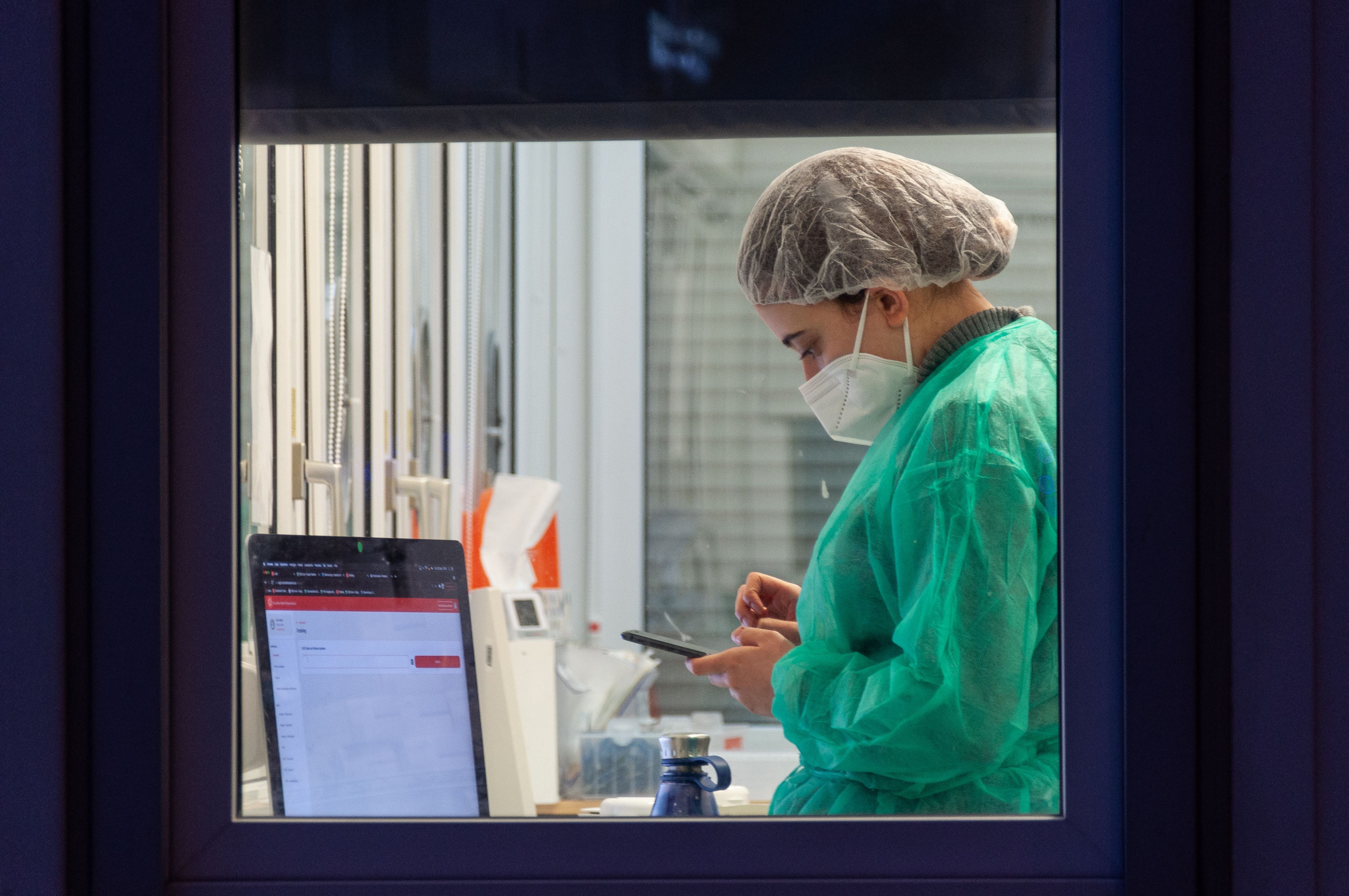
How Are AI Scribes Used in Nursing Workflows?
| Setting | Common Use Cases |
|---|---|
| Bedside RN | Admission and shift assessments, care-plan updates, fall-risk and pressure-injury screening, discharge teaching notes |
| NP visits | New-patient and follow-up visits, chronic-disease management, procedure notes, telehealth encounters |
| Team communication | Multidisciplinary rounds, shift handoffs, goals-of-care and family meetings |
| Care coordination | Care-management calls, post-discharge follow-up, referral documentation |
Built for How Nurses Actually Chart
HosTalky's AI Scribe turns clinical conversations into structured notes, so you spend less time typing and more time with patients.
Try AI Scribe FreeWhat Are the Limitations and Risks of Nursing AI Scribes?
AI scribes don't eliminate documentation work, they change it. A responsible look at the evidence has to include where things go wrong.
The real error data, in full context: a 2026 pilot study evaluating 356 AI-generated notes found 94.7% were free from significant errors, genuinely reassuring. Among the errors that did occur: accidental omissions were most common (18%), followed by hallucinations (11.5%) and accidental inclusions (9.3%). About 5.3% of notes (19 of 356) contained errors rated as posing serious or imminent risk if left uncorrected. One more detail worth knowing: 14.9% of notes in that study were left completely unedited by the reviewing physician, a reminder that the safety net only works if clinicians actually use it. For a broader look at how AI documentation compares to manual charting, see AI Scribe vs Manual Documentation: Time & Accuracy Compared.
Context and Nuance Gaps
AI may misattribute who said what, miss nonverbal cues, or fail to capture the subtle clinical reasoning a nurse would normally document by hand.
High-Acuity and Noisy Environments
Tools tested in quiet outpatient clinics may perform differently in busy wards, EDs, and ICUs with overlapping conversations and alarms, exactly the environments where much nursing work happens.
Role-Specific Gaps
Some tools are built for physician E/M notes and may not fully support NANDA-I diagnoses or ADPIE care plans unless specifically configured for nursing use, worth checking directly before adopting one for bedside RN work.
Skip the Charting Burnout
Reading about the benefits of AI documentation is one thing, experiencing it on a hectic shift is another. HosTalky AI Scribe is built to bridge the gap between bedside care and clean records:
- Mobile-first design: built for use during rounds and handoffs, not tethered to a desktop
- Flexible clinical templates: switch between nursing notes, SOAP formats, and rapid shift summaries
- Honest gap-flagging: designed to flag when something wasn't covered rather than filling in blanks
What Should Hospitals Look for in an AI Scribe Vendor?
An AI scribe is only one piece of a nurse's daily toolkit. See Effective Communication Tools in Nursing for how documentation fits into the wider picture. When evaluating a scribe specifically, look for:
- Nursing-specific templates: ADPIE, NANDA-I, NIC/NOC, Braden, Morse, fall-risk, and education documentation support
- NP visit support: history, exam, assessment, plan, and E/M-level documentation where relevant
- Handoff and SBAR tools: built-in structures for shift summaries and care transitions
- EHR integration: genuine compatibility with your specific EHR, not just a generic export
- Editing workflow: a review and sign-off process that actually fits your existing routine
- Privacy and security: clear data-processing, retention, and deletion policies for your jurisdiction
- Pilot first: the ability to test the tool and review error patterns before a full rollout
4 Questions Hospital IT Should Ask AI Scribe Vendors Before Purchasing
- Does the tool natively support nursing documentation formats, or was it built for physician E/M notes and adapted afterward? Ask for a live demo using ADPIE or NANDA-I specifically, not just a generic sample note.
- What happens to audio data after a note is generated? Get a clear answer on retention period, whether recordings are used for model training, and who has access.
- How does the tool perform in high-acuity, multi-voice environments? Request performance data from ICU or ED settings specifically, not just quiet outpatient clinics, since that's where the evidence gap is largest.
- What does the error-review workflow actually look like? Ask how flagged uncertainties are surfaced to the reviewing clinician, and whether the vendor tracks omission and hallucination rates over time.
Key Takeaways
- AI scribes can reduce documentation time and support nursing-specific formats like ADPIE and SBAR, when configured correctly.
- 94.7% of AI-generated notes in a 2026 pilot were error-free, but 5.3% contained serious-risk errors, clinician review remains essential.
- Bedside RN adoption is earlier-stage than physician or NP adoption, and tool fit varies by unit and EHR.
- High-acuity, noisy environments like the ICU haven't been studied as thoroughly as quiet outpatient settings.
- The safest model is clinician-supervised: the AI drafts, the nurse or NP verifies and signs.
Ready to see this in practice? Explore HosTalky AI Scribe and try it on your next shift.
FAQs
Can AI scribes support nursing-specific documentation like NANDA-I and ADPIE?
Some can, but not all. Nursing-focused product evaluations note that many AI scribes are optimized for physician E/M notes and may not fully support NANDA-I diagnoses, ADPIE care plans, or nursing interventions unless specifically configured. This is a key criterion to check before adopting a tool for bedside nursing use.
How accurate are AI-generated clinical notes?
A 2026 pilot study evaluating 356 AI-generated notes found 94.7% were free from significant errors. Among the errors present, accidental omissions were most common (18%), followed by hallucinations (11.5%). About 5.3% of notes contained errors rated as posing serious or imminent risk if left uncorrected, which is why clinician review before signing remains essential.
Do AI scribes work well in high-acuity nursing environments like the ICU?
Research suggests performance may not generalize well from quiet outpatient settings to busy, high-acuity environments. ICU clinicians in one qualitative study were optimistic about AI scribes capturing multidisciplinary rounds and handoffs, but emphasized the need for personalization and transparent data-use policies given the complexity of overlapping conversations and alarms.
Is bedside RN adoption of AI scribes as common as physician adoption?
No. Nursing-focused product evaluations note that bedside RN adoption is earlier-stage than adoption among physicians and advanced practice providers. Integration depth also varies significantly by hospital and EHR system.
Do AI scribes eliminate the need for nurses to review documentation?
No, and this is a critical point. AI scribes change documentation work, they don't eliminate it. The safest model is clinician-supervised: the AI prepares a draft, and the nurse or NP verifies, edits, and approves the final record before it becomes part of the patient's chart.
Sources & References
▾