


What Is Burnout Theory in Healthcare?
Burnout is one of the most consequential, and most misunderstood, issues in modern healthcare. It's not just feeling tired after a hard shift, it's a specific, measurable syndrome with real causes and real evidence-based fixes. This article breaks down the theory, the actual data, and what genuinely helps.
Burnout theory, developed by Freudenberger and later Maslach, describes 3 dimensions: emotional exhaustion, depersonalization, and reduced accomplishment. VHA data shows healthcare worker burnout at 35.4% in 2023, still 16.4% above pre-pandemic levels. The most effective fixes are organizational: adequate staffing, autonomy, and peer support, not just individual coping strategies.
What Is Burnout Theory?
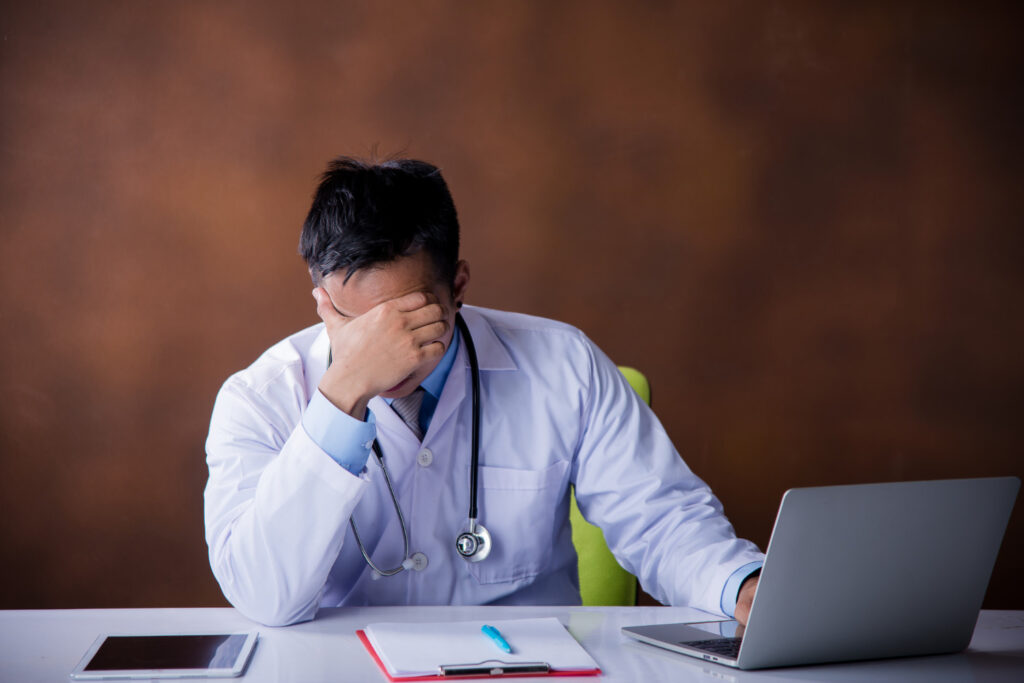
Burnout theory originates from psychologist Herbert Freudenberger's work in the 1970s, who first described the phenomenon among healthcare workers. Christina Maslach later developed the Maslach Burnout Inventory (MBI), the most widely used tool for measuring burnout. The World Health Organization defines burnout as "a syndrome conceptualized as resulting from chronic workplace stress that has not been successfully managed."
Worth being precise about: WHO's ICD-11 (code QD85) explicitly classifies burnout as an occupational phenomenon, not a medical condition. It sits in the "factors influencing health status" chapter, the category for reasons people seek care that aren't classified as illnesses, not alongside diagnosable conditions like depression or anxiety.
Burnout is also worth distinguishing from a related but different construct: moral injury, the guilt, shame, or sense of betrayal that comes from being forced by systemic constraints to act against one's own deeply held clinical or ethical values. Unlike burnout's exhaustion and disengagement, moral injury is a distinct psychological wound, and the two are frequently conflated in healthcare settings.
| Dimension | Workplace Stress | Burnout | Moral Injury |
|---|---|---|---|
| Primary state | Over-engagement, urgency | Disengagement, emotional blunting | Guilt, shame, betrayal |
| Root cause | Short-term excessive demands | Chronic, unmanaged systemic stressors | Being forced to act against one's own ethical values |
| Effective response | Rest, load reduction | Systemic, organizational change | Aligning administrative demands with clinical ethics |
These 3 states overlap but aren't interchangeable, a useful distinction when trying to identify what's actually driving how a team feels.
| Dimension | What It Looks Like |
|---|---|
| Emotional exhaustion | Feeling drained and fatigued by work |
| Depersonalization | A cynical attitude toward patients or colleagues |
| Reduced personal accomplishment | Feeling ineffective or unproductive despite effort |
How Widespread Is Burnout in Healthcare?
A study analyzing Veterans Health Administration survey data across 140 medical centers, published in JAMA Network Open, tracked over 169,000 healthcare workers and found burnout reached 35.4% in 2023, still 16.4% above pre-pandemic levels despite declining from a 2022 peak of 39.8%. Primary care physicians reported the highest burnout of any specialty, ranging from 46.2% to 57.6% over the study period.
Worth correcting directly: the original version of this article cited this VHA statistic with a link to a document about veteran patients' healthcare usage survey, an entirely different report. The actual source is Mohr et al., "Burnout Trends Among US Health Care Workers," JAMA Network Open, 2025, linked properly below.
Nurses face significant burnout too, with recent studies showing rates in the 62-66% range. The World Health Organization estimated at least 25% of healthcare workers globally reported anxiety, depression, or burnout symptoms during the pandemic, with public health workers specifically at 37.4%. Burnout also varies significantly by generation, see Gen Z Burnout: Why Younger Healthcare Workers Are Leaving for how this plays out among the newest members of the workforce.
What Are the Key Models of Burnout Theory?
What Is Freudenberger's Burnout Model?
Freudenberger's Burnout Model proposed that burnout results from a gradual depletion of emotional and physical resources due to excessive demands. Healthcare professionals who overcommit and neglect self-care are especially prone to this pattern.
What Is Maslach's Burnout Model?
Maslach identified 3 factors driving burnout: excessive workload, lack of control or autonomy, and insufficient reward or recognition. Burnout happens specifically when there's a mismatch between what healthcare workers expect and what their actual working environment provides.
What Is the Job Demands-Resources (JD-R) Model?
The Job Demands-Resources (JD-R) model, developed as an alternative to Maslach's approach, separates workplace factors into job demands (excessive EHR documentation time, understaffing, high patient acuity) and job resources (schedule control, administrative support, recognition, autonomy). High demands without sufficient resources drive exhaustion; adequate resources drive engagement instead. Workload is consistently the strongest predictor of burnout, while organizational support is the strongest protective factor.
Systemic fixes outperform individual resilience training. Standard clinical guidance from the AMA, CDC, and WHO consistently emphasizes organizational reforms, ambient AI scribes to cut EHR hours, flexible shift scheduling, adequate staffing ratios, over individual wellness initiatives like mindfulness apps alone. Personal coping strategies help, but they don't fix a structural demands-resources mismatch. For a deeper look at the documentation and staffing side specifically, see Work Overload in Healthcare: Causes, Signs & Solutions.
Fewer Administrative Demands, More Job Resources
HosTalky reduces the administrative burden and communication friction that pile onto job demands, giving teams back the coordination and clarity that function as real protective resources against burnout.
Explore HosTalkyWhat Strategies Actually Reduce Burnout?
- Improved work-life balance: flexible scheduling, wellness programs, and mental health resources
- Adequate staffing: research indicates that reducing nurse-to-patient ratios meaningfully reduces burnout, worth verifying against current unit-specific data before citing an exact percentage
- Increasing autonomy: giving workers more control over scheduling and decisions reduces feelings of helplessness
- Peer support and mentorship: structured systems for sharing experience reduce isolation and emotional strain, see Why Teamwork Matters in Healthcare for the broader evidence behind this
- Recognition: regular acknowledgment of effort measurably improves morale
See more in Evidence-Based Activities to Reduce Hospital Staff Burnout, and for what drives the stress in the first place, Top Stressors Among Healthcare Workers.
Key Takeaways
- Burnout is a specific, 3-dimensional syndrome, exhaustion, depersonalization, reduced accomplishment, not just general tiredness.
- Real VHA data shows burnout at 35.4% in 2023, still above pre-pandemic levels despite recent improvement.
- The JD-R model explains burnout as a mismatch between job demands and available resources, workload is the strongest predictor.
- Organizational-level change (staffing, autonomy, peer support) matters more than individual coping strategies alone.
- Verify statistics against primary sources directly, this article corrected a mismatched citation found in its own prior version.
FAQs
What causes burnout in healthcare professionals?
Burnout is caused by a combination of high job demands, emotional stress, and insufficient resources. Long hours, lack of support, staffing shortages, and lack of autonomy all contribute significantly.
What are the signs of burnout in healthcare workers?
Common signs include emotional exhaustion, a cynical or detached attitude toward patients or colleagues, feeling ineffective despite effort, irritability, and physical symptoms like fatigue, headaches, or insomnia.
Is burnout the same as depression?
No, although they share symptoms. Burnout is specifically tied to work stress, while depression is a broader mental health condition that can occur independently of work. Burnout can contribute to depression, but the two aren't interchangeable diagnoses.
Can healthcare worker burnout be prevented?
Yes, through a combination of organizational change (adequate staffing, workload management, autonomy) and individual strategies (peer support, mindfulness, professional help when needed). Organizational-level change tends to matter more than individual coping alone.
Sources & References
▾