

How Long Do Flu Symptoms Last?
Flu season brings aches, fevers, and fatigue that make you wonder how long you'll actually feel this way. Here's the real timeline, real warning signs to watch for, and what genuinely helps you recover faster. Not sure if it's flu or something else? See Flu A vs. Flu B: What's the Difference?
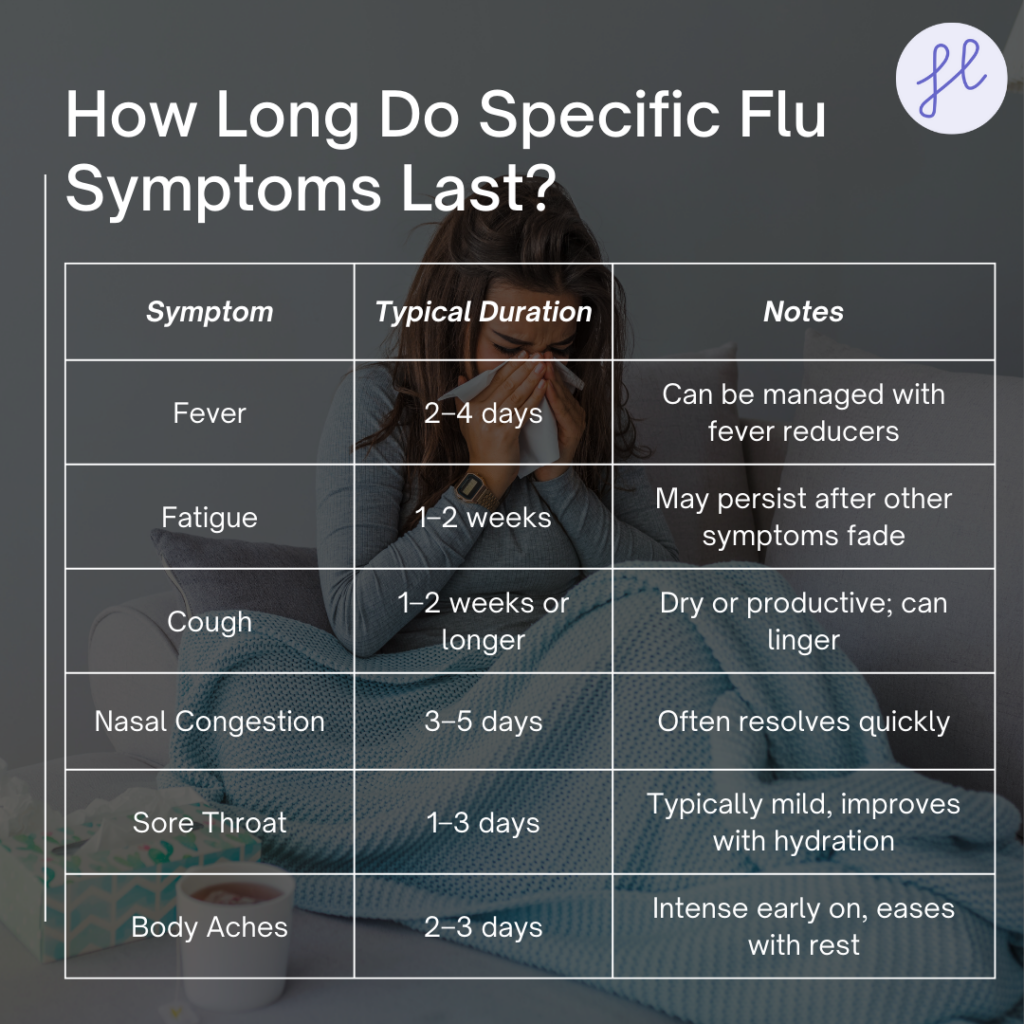
According to the CDC, uncomplicated flu symptoms typically resolve within 3 to 7 days, though cough and fatigue can linger for 2 weeks or more. Rest, fluids, and over-the-counter medication help most people recover. Seek care immediately for difficulty breathing, persistent chest pain, confusion, or symptoms that return after improving.
How Long Do Flu Symptoms Typically Last?
The CDC reports that uncomplicated flu symptoms typically resolve within 3 to 7 days, though cough and general tiredness can persist for 2 weeks or more, especially in older adults and people with chronic lung conditions.
| Stage | Timing | What's Happening |
|---|---|---|
| Pre-symptomatic | ~1 day before symptoms | Already contagious, before you feel sick |
| Acute onset | Day 1-2 | Sudden fever, chills, body aches, fatigue; peak contagiousness |
| Respiratory phase | Day 3-4 | Sore throat, cough, congestion; fever may decline |
| Recovery window | Day 5-7 | Most people improve; still contagious through this period for most adults |
| Lingering effects | Week 2+ | Cough and fatigue can persist after contagiousness ends |
Most healthy adults are contagious from about 1 day before symptoms through 5-7 days after. Children under 5, older adults, and people with weakened immune systems can remain contagious significantly longer, sometimes 10 days or more.
The 24-hour fever-free rule: per CDC guidance, you're generally ready to return to normal activities once you've been fever-free for at least 24 hours without fever-reducing medication, and your other symptoms are clearly improving. This is a minimum guideline, not a guarantee you're no longer contagious at all.
The 48-hour antiviral window: prescription antiviral drugs like oseltamivir (Tamiflu) or baloxavir (Xofluza) work best when started within 48 hours of symptom onset, potentially shortening illness by 1-2 days. Started later, they're considerably less effective. If you're in a high-risk group, contact a provider early rather than waiting to see if symptoms worsen, and if cost is a concern, see what a clinic visit typically costs before deciding to wait it out.
What Affects How Long Flu Symptoms Last?
Recovery time depends on several factors:
- Age: young children and older adults may take longer to recover
- Health status: pre-existing conditions like asthma, diabetes, or heart disease can prolong symptoms
- Immune system strength: a weakened immune system can extend recovery time
- Complications: secondary infections like sinusitis or pneumonia can make symptoms last longer
How Can You Recover From the Flu Faster?
There's no cure for the flu, but these steps genuinely help:
- Rest: your body needs energy to fight the virus; avoid strenuous activity
- Stay hydrated: water, herbal teas, and broths help prevent dehydration
- Over-the-counter medication: ibuprofen or acetaminophen can reduce fever and aches
- Use a humidifier: moist air relieves congestion and soothes a sore throat
- Eat nutritious, easy-to-digest foods: focus on foods that support your immune system

Behind Every Recovery Is a Care Team
HosTalky supports the healthcare professionals you turn to when symptoms need real medical attention, so their communication and documentation keep pace with your care.
Learn More About HosTalkyWhen Should You See a Doctor for Flu Symptoms?
If symptoms persist beyond 7 days or worsen significantly, seek medical advice. Not sure whether that means a phone call, a clinic visit, or urgent care? See What Services Are Offered in a Medical Clinic for a breakdown of when urgent care makes sense versus the ER. The CDC's official emergency warning signs are more specific than most guides mention, worth knowing exactly what to watch for.
| In Adults | In Children |
|---|---|
| Difficulty breathing or shortness of breath | Fast or troubled breathing |
| Persistent chest or abdominal pain or pressure | Bluish lips or face |
| Sudden dizziness or confusion | Ribs pulling in with each breath |
| Seizures | Severe muscle pain; not alert when awake |
| Not urinating | Dehydration signs: no urine for 8 hours, dry mouth, no tears when crying |
| Severe muscle pain or weakness | Fever above 104°F |
| Symptoms improve, then return with fever and worsening cough | Fever or cough that improves, then returns or worsens |
Source: Centers for Disease Control and Prevention (CDC), Emergency Warning Signs of Flu.
Worth being direct about: kids can also show additional symptoms adults typically don't, like vomiting, diarrhea, or abdominal pain, which can make the flu look like a stomach bug. If a child's symptoms last longer than usual, seem unusually severe, or match any warning sign above, contact a pediatrician right away, don't wait to see if it resolves on its own.
Key Takeaways
- Uncomplicated flu symptoms typically resolve in 3 to 7 days, per the CDC, though cough and fatigue can linger longer.
- Age, existing health conditions, and immune strength all affect how long recovery takes.
- Rest, hydration, and OTC medication are the most reliable ways to feel better faster, there's no cure.
- Adults and children have distinct emergency warning signs, know both if you're caring for a child.
- Symptoms that improve and then return with fever and worsening cough often signal a secondary infection, seek care.
FAQs
How long do flu symptoms typically last?
According to the CDC, uncomplicated flu symptoms typically resolve within 3 to 7 days, though cough and general tiredness can linger for 2 weeks or more, especially in older adults and people with chronic lung conditions.
What are the emergency warning signs of flu in adults?
Seek medical care right away for: difficulty breathing, persistent chest or abdominal pain or pressure, sudden dizziness or confusion, seizures, not urinating, severe muscle pain, severe weakness or unsteadiness, or symptoms that improve but then return with fever and worsening cough.
What are the emergency warning signs of flu in children?
Seek immediate care if a child has fast or troubled breathing, bluish lips or face, ribs pulling in with each breath, severe muscle pain, signs of dehydration (no urine for 8 hours, dry mouth, no tears when crying), isn't alert when awake, has a fever above 104°F, or has fever or cough that improves and then returns or worsens.
This article is for informational purposes and doesn't replace professional medical advice. If you're experiencing severe or concerning symptoms, contact a healthcare provider.