

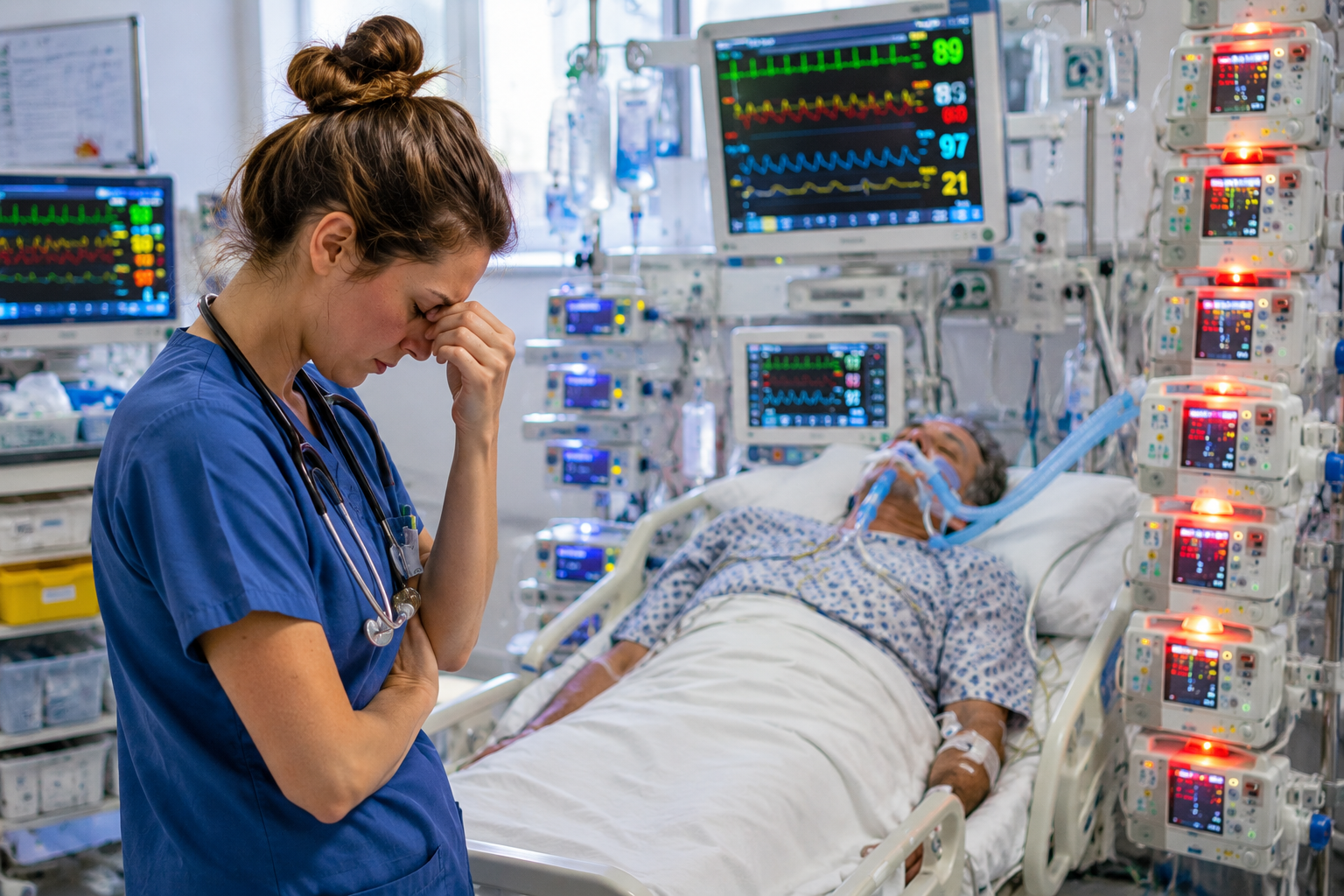
Alarm Fatigue in the ICU vs General Wards: What's the Difference
Alarm fatigue in the ICU and alarm fatigue on a general ward are not the same problem. ICU nurses face up to 142 alarms per patient per day, respond to alarms for 35% of their working time, and work in an environment where even a brief lapse in alarm response can have life-threatening consequences. General ward nurses face fewer alarms in absolute terms but a higher proportion of non-actionable alerts relative to their monitoring volume. Understanding where alarm fatigue hits hardest, and why, is the starting point for choosing the right fix.
- ICU nurses face 142 alarms per patient per day and spend 35% of their working time responding to alarms, compared to approximately 67 alarms per shift on a general medical-surgical unit, according to published monitoring data.
- Only 5-13% of ICU alarms require clinical intervention, meaning the vast majority of the alarm burden in critical care is non-actionable, a higher false alarm density than most general ward environments.
- Cardiac ICU nurses show significantly higher alarm fatigue scores than nurses in general ICUs, driven by the volume of arrhythmia alarms, 98% of which are false in patients on left ventricular assist devices.
- Nurses working 12-hour shifts report significantly higher alarm fatigue than those on 8 or 24-hour shifts, making shift structure one of the most overlooked drivers of alarm fatigue in both ICU and general ward settings.
- Training in alarm management is the most consistently effective intervention across both settings. But almost half of ICU nurses have never received any formal training on monitoring device alarm management.
- The right intervention depends on the unit type. ICU settings require threshold customization, tiered prioritization, and direct nurse routing. General wards benefit most from threshold customization and staff education.
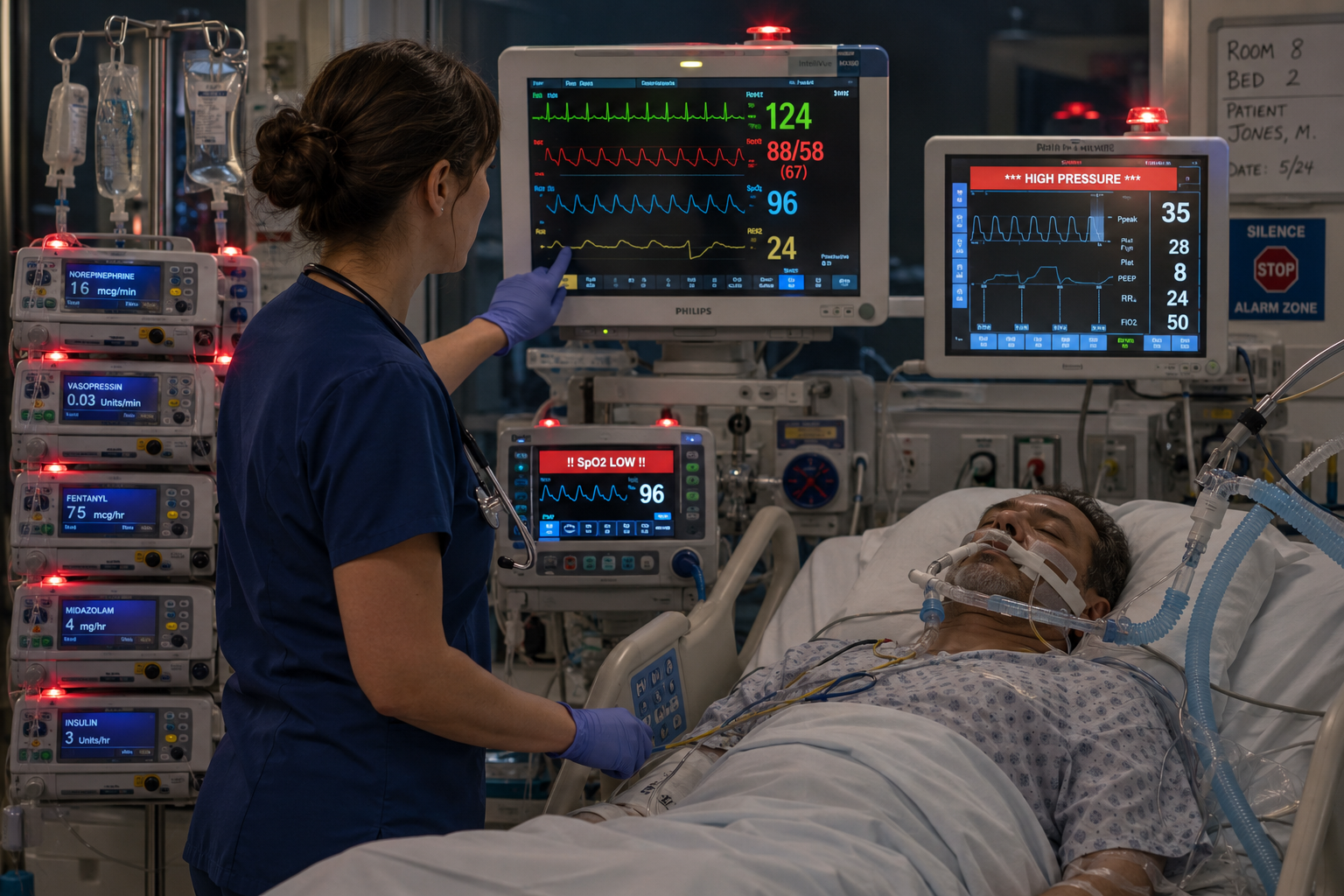
How Alarm Fatigue Differs Between the ICU and General Wards
Alarm fatigue in the ICU is primarily a volume and density problem. Alarm fatigue on general wards is primarily a calibration problem. Both settings suffer from high non-actionable alarm rates, but the mechanism and the appropriate response differ enough that interventions designed for one setting often underperform in the other.
In the ICU, patients connect to multiple devices at once: cardiac monitors, ventilators, pumps, and arterial lines. Each device fires its own alarm stream. The result is an environment so saturated that alarm response takes up more than a third of a nurse's working time. The problem is not carelessness. The signal-to-noise ratio has collapsed so badly that deciding which alarms matter requires constant, exhausting judgment every single shift.
On general medical-surgical wards, monitoring density is lower but the calibration problem is acute. A 2024 study published by the Academy of Medical-Surgical Nurses found that 80% of alarms on a 31-bed step-down unit were non-actionable. Not because of device complexity but because alarm parameters were set at manufacturer defaults rather than calibrated to each patient's clinical profile. The fix on a general ward is mostly a threshold problem. The fix in the ICU is a systems and workflow problem.
Alarm Fatigue in the ICU: What the Data Shows
ICU alarm fatigue is severe, measurable, and driven by one consistent root cause: too many alarms, too few of them clinically meaningful. A 2023 study of 400 ICU nurses found a mean alarm fatigue score of 25.8 out of 44. Nearly one in ten nurses reporting they silence alarms at the start of each shift.
A 2023 study by Lewandowska et al. in the Journal of Clinical Medicine surveyed 400 ICU nurses in Poland. The mean alarm fatigue score was 25.8 out of a possible 44, indicating a significant and measurable burden. Nearly one in ten nurses reported silencing alarms at the start of each shift. One in three reported that alarm sounds prevented them from focusing on professional duties.
The ICU alarm environment is not uniform across unit types. The Lewandowska study found that nurses in Intensive Cardiac Surveillance Units, including Cardiac Surgery, showed significantly higher alarm fatigue scores than nurses in other ICU types. The alarm volume data explains why. Patients on left ventricular assist devices generated 549 arrhythmia alarms over 593 hours. 98% were false. Even in standard cardiac monitoring, the alarm volume is 128 per patient per day. That is high enough to produce measurable desensitization across the nursing team.
Shift Length Makes It Worse
One of the less-discussed drivers of ICU alarm fatigue is shift structure. Combined with documentation burdens that AI scribes are only beginning to address, the 12-hour shift creates a compounding workload that makes alarm desensitization almost inevitable. The Lewandowska study found that nurses working 12-hour shifts showed significantly higher alarm fatigue scores than those working 8 or 24-hour shifts. The 12-hour shift is the worst format for alarm fatigue. It is long enough for sensory overload to build up, but not long enough for the adaptation that 24-hour shift workers develop.
Clinical implication: Alarm fatigue protocols that do not account for shift length are missing one of the four independently confirmed predictors of higher fatigue. The other three are: absence of alarm management training, employment in a Cardiac ICU, and open ward structure. Units should check their own combination of risk factors before picking an intervention.
Alarm Fatigue on General Wards: A Different Problem
General ward alarm fatigue is lower in absolute volume but driven by a more correctable root cause: default alarm parameters that have never been adjusted to reflect actual patient populations.
The AMSN 2024 unit study on a 31-bed step-down unit found 400 total alarms over a six-night-shift cycle, with 80% non-actionable. After four interventions (threshold customization, visual cues, staff education, and feedback), total alarms dropped 40% and non-actionable alarms dropped 42.5%. Crucially, the actionable alarm rate held consistent at 20-23%, confirming that the interventions reduced noise without suppressing clinically important alerts.
This is the key structural difference between ICU and general ward alarm fatigue. On a general ward, the non-actionable alarm rate is high because default alarm settings are built for broad populations, not individual patients. Adjusting settings per patient produces fast, large reductions. In the ICU, patients are sicker and more varied, devices are more complex, and some false alarms come from the technology itself, not just poor calibration.
The Key Differences Side by Side
| Dimension | ICU | General Ward |
|---|---|---|
| Alarm volume | 142 alarms/patient/day | ~67 alarms/shift |
| Non-actionable rate | 87–95% | 80% |
| Primary cause | Device complexity + density | Default threshold calibration |
| Highest-risk subunit | Cardiac ICU | Step-down / telemetry |
| Shift structure impact | 12-hour shifts = highest fatigue | Less studied |
| Training gap | 45.7% never trained | Varies by institution |
| Best starting intervention | Tiered prioritization + routing | Threshold customization |
| Reduction achievable | 30–60% with combined approach | 40–42.5% with 4 interventions |
What Works in the ICU vs What Works on General Wards
The ICU needs tiered prioritization and direct nurse routing first. General wards need threshold customization first. Applying the wrong protocol to the wrong setting wastes time and produces disappointing results.
In the ICU
The ICU alarm environment requires a layered approach. Threshold customization alone is insufficient when a patient is connected to eight devices, each generating independent alarm streams. The most effective ICU interventions combine tiered alarm prioritization, which assigns each alert a criticality level and routes only high-priority alerts as auditory signals, combined with clinical communication tools that deliver alerts directly to the responsible nurse's device. Platforms like HosTalky use verified clinician identity (CareID) to ensure alerts reach the right nurse, not just any available device on the floor. This eliminates the coverage ambiguity that overhead alarms create on a busy ICU floor.
Training is the most powerful single intervention in the ICU because the gap is so wide. The Lewandowska study confirmed that training significantly reduced alarm fatigue scores (p=0.000004). Yet nearly half of ICU nurses have never received any. Fixing that gap produces measurable fatigue reduction without any technology change.
On General Wards
General wards benefit most from per-patient threshold customization at admission and shift change, combined with visual cues at the bedside and a feedback loop that shows nursing teams the data on their own alarm reduction. The AMSN 2024 protocol achieved 40-42.5% reductions with exactly these four components. For the full step-by-step guide written for general ward nurses, see how to reduce alarm fatigue in nursing.
One Platform for ICU and General Ward Alarm Routing
HosTalky integrates with clinical monitoring systems to deliver HIPAA-compliant alarm notifications directly to the responsible nurse's device, whether that is on a critical care floor or a step-down unit.
See How HosTalky WorksFAQs
Is alarm fatigue worse in the ICU or on general wards?
Which ICU type has the highest alarm fatigue?
Why does shift length affect alarm fatigue?
Can the same alarm fatigue interventions work in both the ICU and general wards?
What is the most overlooked cause of alarm fatigue in the ICU?
Conclusion
Alarm fatigue in the ICU and on general wards starts the same way: too many alerts, too few that matter, and nurses who gradually stop responding. But the drivers and the right fixes differ enough that unit-specific diagnosis matters more than any one-size-fits-all protocol. ICU teams need to tackle device complexity, shift structure, and the fact that nearly half of ICU nurses have never been trained on alarm management. General ward teams need to fix the default parameter settings that generate 80% non-actionable alarms before any process change has even started. The evidence-based alarm fatigue solutions that consistently produce results are the same in both settings. They just need to be sequenced differently depending on where you start.
Sources and References
- Lewandowska, K. et al. (2023). Determining Factors of Alarm Fatigue among Nurses in Intensive Care Units: A Polish Pilot Study. Journal of Clinical Medicine. pubmed.ncbi.nlm.nih.gov
- He, X. et al. (2021). Research on Patient Monitoring Alarms in ICU and NICU. Chinese Journal of Medical Instrumentation.
- Watanakeeree, K. et al. (2021). ECG alarms during left ventricular assist device (LVAD) therapy in the ICU. Heart and Lung.
- Nieve, M. (2024). Reducing Non-Actionable Alarms to Improve Patient Care and Staff Well-Being. Academy of Medical-Surgical Nurses. amsn.org
- The Joint Commission. (2025). National Patient Safety Goals: Clinical Alarm Safety. jointcommission.org
- Chromik, J. et al. (2022). Computational Approaches to Alleviate Alarm Fatigue in Intensive Care Medicine. Frontiers in Digital Health. frontiersin.org