


Medical Apps for Doctors This 2026
The average physician now manages clinical decisions, documentation, team communication, and continuing education simultaneously, often between patient encounters on a mobile device. Medical apps for doctors in 2026 have evolved from simple drug references into integrated clinical tools that reduce documentation time, improve team communication, and directly support patient safety outcomes. This guide covers the 10 best medical apps for doctors in 2026, updated with current features, pricing, and the specific clinical problems each one solves.
- Medical apps for doctors are specialized software applications designed for physicians and healthcare professionals that support clinical decision-making, team communication, documentation, and continuing education on mobile and tablet devices.
- HosTalky leads the list for healthcare communication, offering HIPAA-compliant secure messaging, CareID identification, and real-time coordination tools built specifically for clinical teams rather than general enterprise use.
- Epocrates and MDCalc remain the most widely used clinical reference and calculator apps in 2026, with Epocrates downloaded by more than one million healthcare providers and MDCalc offering over 550 evidence-based clinical decision tools.
- UpToDate is the gold standard for evidence-based clinical guidance, used by clinicians in more than 190 countries, though it requires an individual or institutional subscription to access.
- The best medical app for any physician depends on their primary workflow gap, whether that is team communication, drug reference, clinical calculators, visual diagnosis, or continuing medical education.
- All 10 apps listed are available on iOS and most on Android, with pricing ranging from free to subscription-based institutional models.
What Are Medical Apps for Doctors?
Medical apps for doctors are specialized software applications designed for use by physicians and healthcare professionals on smartphones and tablets. They support clinical decision-making at the point of care, provide access to drug databases and treatment guidelines, enable secure communication between care team members, and facilitate continuing medical education.
A 2023 survey by Statista found that more than 85% of physicians in the United States use at least one medical app regularly in their clinical practice. The most common use cases are drug reference (71%), clinical calculators (58%), and secure messaging with colleagues (54%).
2026 update: The major shift since 2024 is the integration of AI-assisted clinical decision support into mainstream apps. Several platforms on this list, including Epocrates and UpToDate, have added large-language-model features for summarizing research and surfacing treatment options. These features are still in varying stages of clinical validation and should be used alongside, not instead of, standard clinical judgment.
The 10 Best Medical Apps for Doctors in 2026
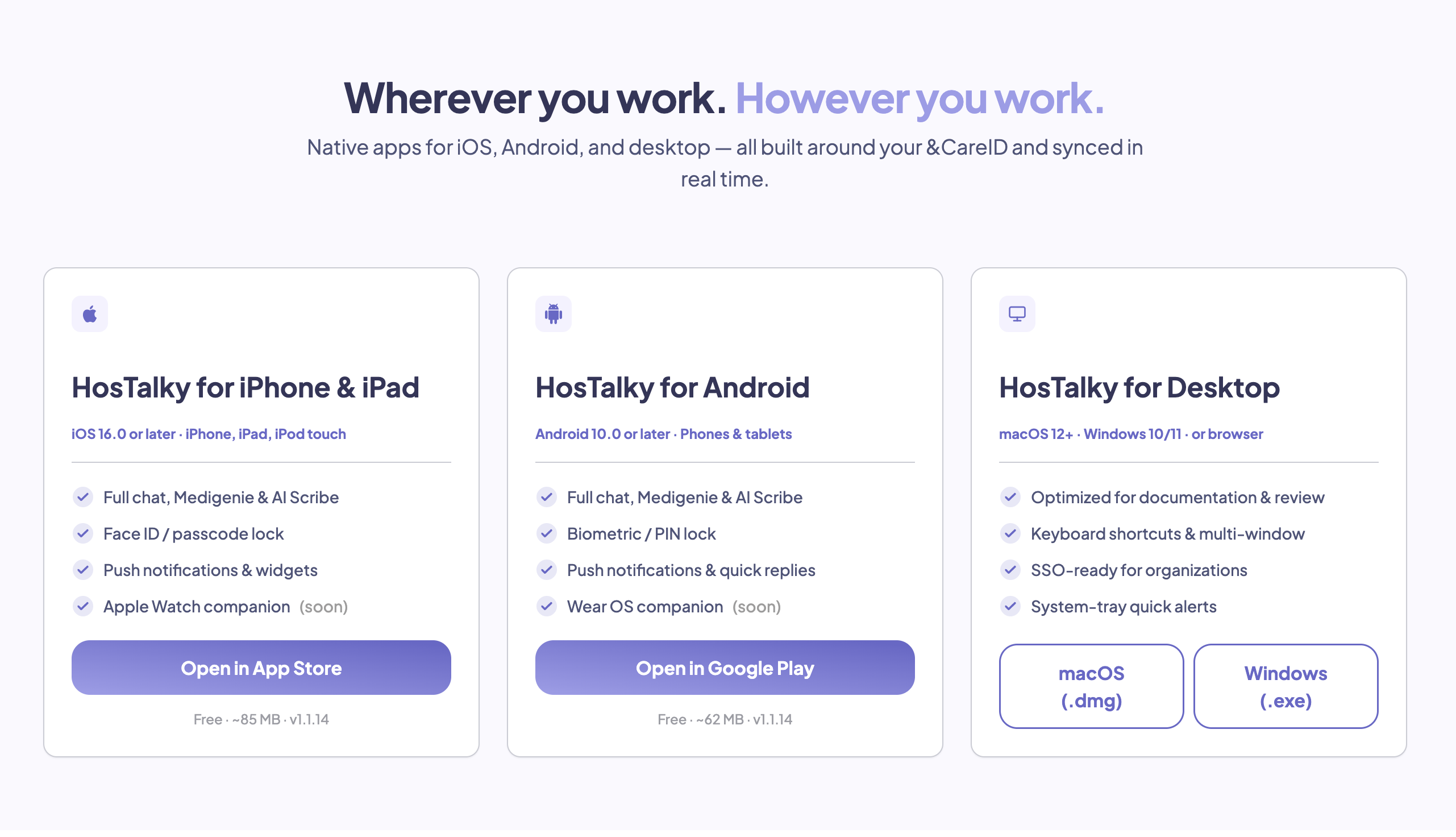
HosTalky is a HIPAA-compliant healthcare communication platform built specifically for clinical teams. Unlike general enterprise messaging tools adapted for healthcare, HosTalky was designed from the ground up for the operational realities of hospital environments, including shift handoffs, multi-department coordination, and real-time patient status updates.
The platform's CareID system gives every clinician a verified identity within the network, eliminating the common problem of reaching the wrong person in a large facility. Secure messaging supports text, voice, and video, while shared reminders and announcements ensure the full care team remains aligned without requiring separate communication channels.
For hospital administrators, HosTalky addresses one of the most persistent operational gaps: the fragmentation of team communication across pagers, personal phones, and unencrypted SMS. Structured clinical communication has been linked to reduced handoff errors, improved response times, and measurable reductions in alarm fatigue when alert routing is integrated with messaging infrastructure.
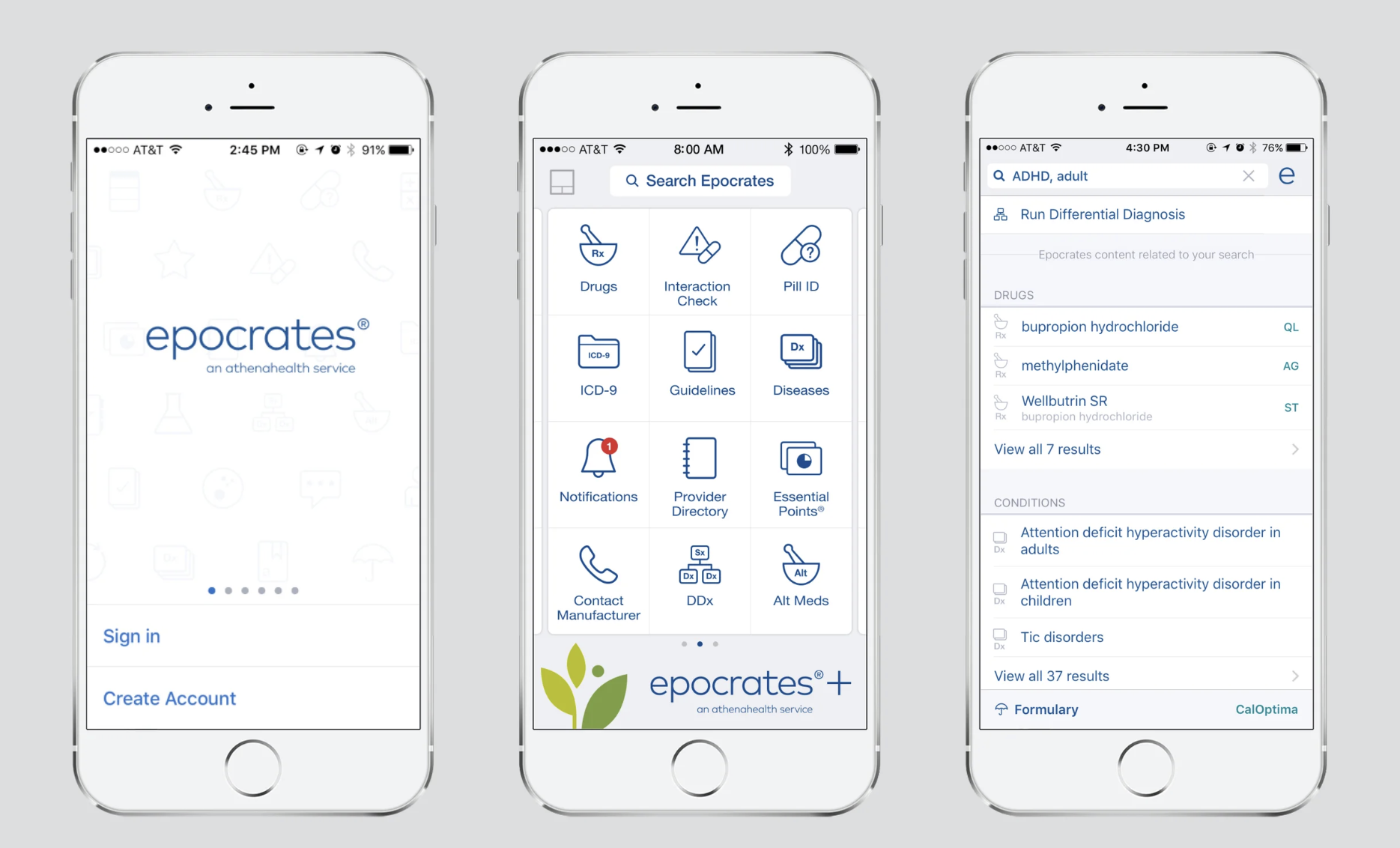
Epocrates is the most widely downloaded clinical reference app among US physicians, with more than one million active healthcare provider users. Its core function is fast, reliable drug information lookup, including dosing, contraindications, drug-drug interactions, and pill identification.
The free version covers the majority of daily drug reference needs. Epocrates Plus adds disease monographs, lab interpretation guides, and clinical guidelines for physicians who need deeper reference capability. In 2025, Athenahealth integrated an AI-assisted drug information summary feature into Epocrates, though this remains in supervised rollout as of 2026.
Epocrates is most valuable for primary care physicians, hospitalists, and pharmacists who need sub-30-second drug lookups during patient encounters without switching to a desktop system.
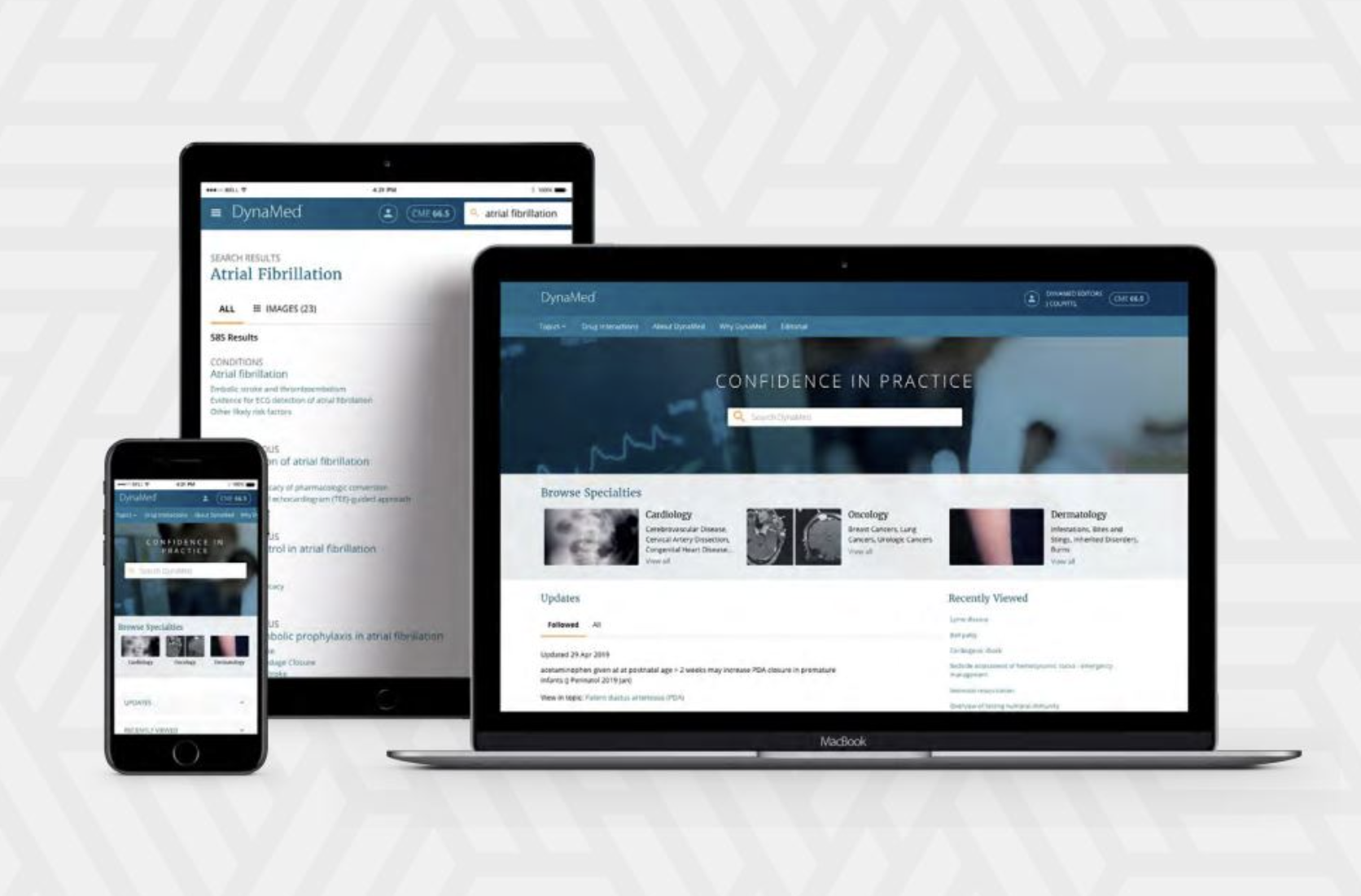
DynaMed is a clinical decision support tool that provides evidence-graded summaries for more than 3,500 medical topics. Each summary is continuously updated as new evidence is published, with clear grading of the strength of recommendations so clinicians can quickly assess how much confidence to place in a given guideline.
The app uses a systematic evidence review process, which differentiates it from reference tools that rely on editorial opinion. DynaMed is particularly strong for internal medicine, family medicine, and hospitalist use cases where evidence quality matters as much as retrieval speed.
A free trial is available before committing to a subscription. Medical students receive discounted access, and institutional licensing is available for health systems that want organization-wide standardization of clinical reference tools.
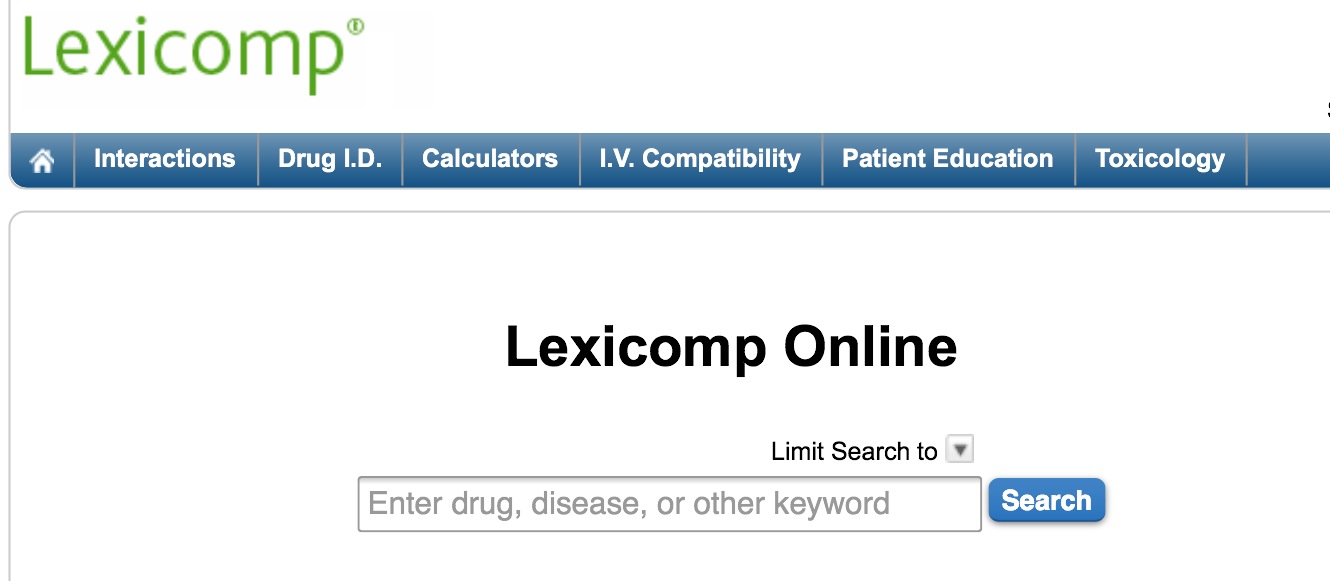
Lexicomp is a comprehensive clinical database built primarily around medication information, with particular depth in oral disease, infectious disease, and toxicology. It is one of the few clinical apps that provides detailed coverage across pharmacy, dentistry, and medicine in a single platform.
Beyond medications, Lexicomp includes built-in medical dictionaries, clinical calculators, and patient education materials that can be distributed directly from the app. Tiered subscription plans allow clinicians to select the specific databases most relevant to their specialty rather than paying for content they will not use.
Lexicomp is most commonly used by clinical pharmacists, hospital pharmacy departments, and physicians in specialties with complex polypharmacy profiles such as oncology and infectious disease.
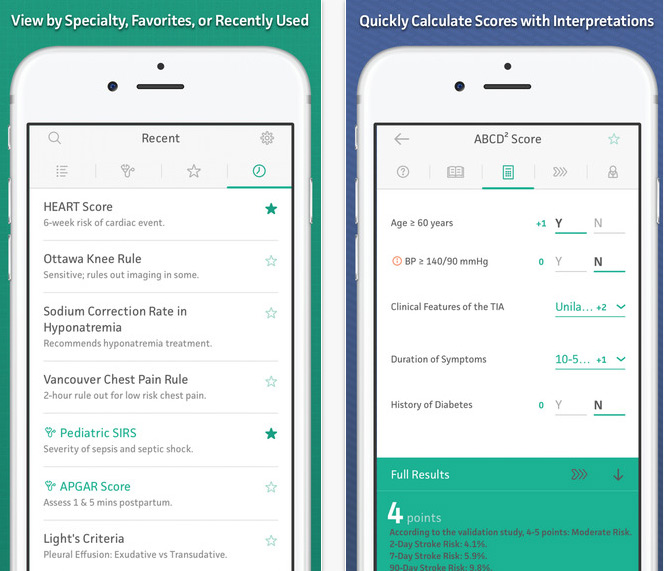
MDCalc provides more than 550 evidence-based clinical decision tools, including validated risk scoring systems, dosing calculators, and diagnostic criteria. Every calculator links directly to the original validating study, allowing clinicians to review the evidence basis before applying a score in practice.
The app is free to register and use for all standard calculator functions. A paid subscription unlocks Continuing Medical Education (CME) credit for reviewing specific calculators, which is particularly useful for physicians managing annual CME requirements.
MDCalc is most frequently used in emergency medicine, internal medicine, and critical care settings where validated risk stratification tools such as the CURB-65, Wells Score, and HEART Score are applied multiple times per shift.
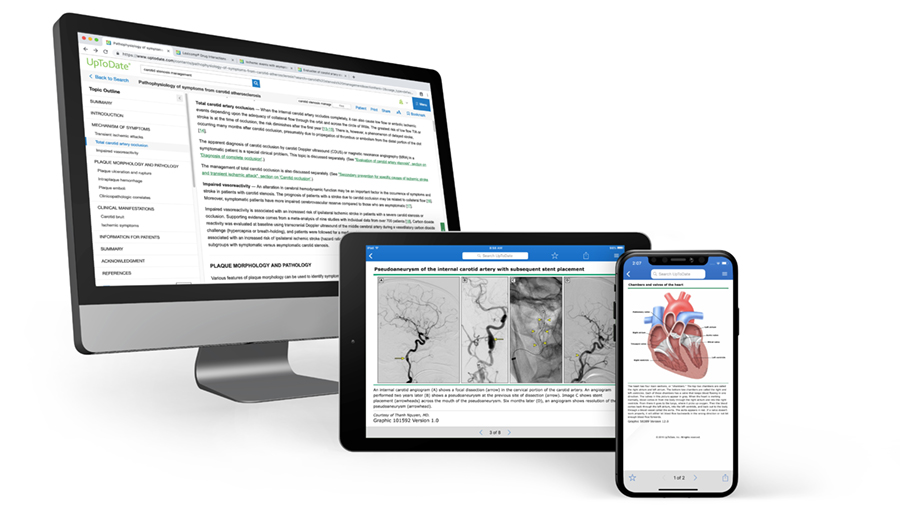
UpToDate by Wolters Kluwer is the most widely used clinical decision support resource globally, available in more than 190 countries. Its content is written and peer-reviewed by practicing clinicians, covering more than 12,000 medical topics with graded recommendations tied directly to the supporting evidence.
A 2022 study published in the Journal of the American Medical Informatics Association found that UpToDate use was associated with shorter hospital length of stay and lower mortality rates in hospitals where it was consistently used at the point of care. This makes it one of the few clinical apps with direct outcome evidence.
UpToDate requires an individual or institutional subscription. Most health systems include it in their clinical information system contracts, meaning many hospital-based physicians access it through their employer rather than a personal subscription.
Looking for a Communication App Built for Hospitals?
HosTalky gives healthcare teams HIPAA-compliant secure messaging, CareID verification, and real-time coordination tools designed for clinical environments, not adapted from enterprise software.
See How HosTalky Works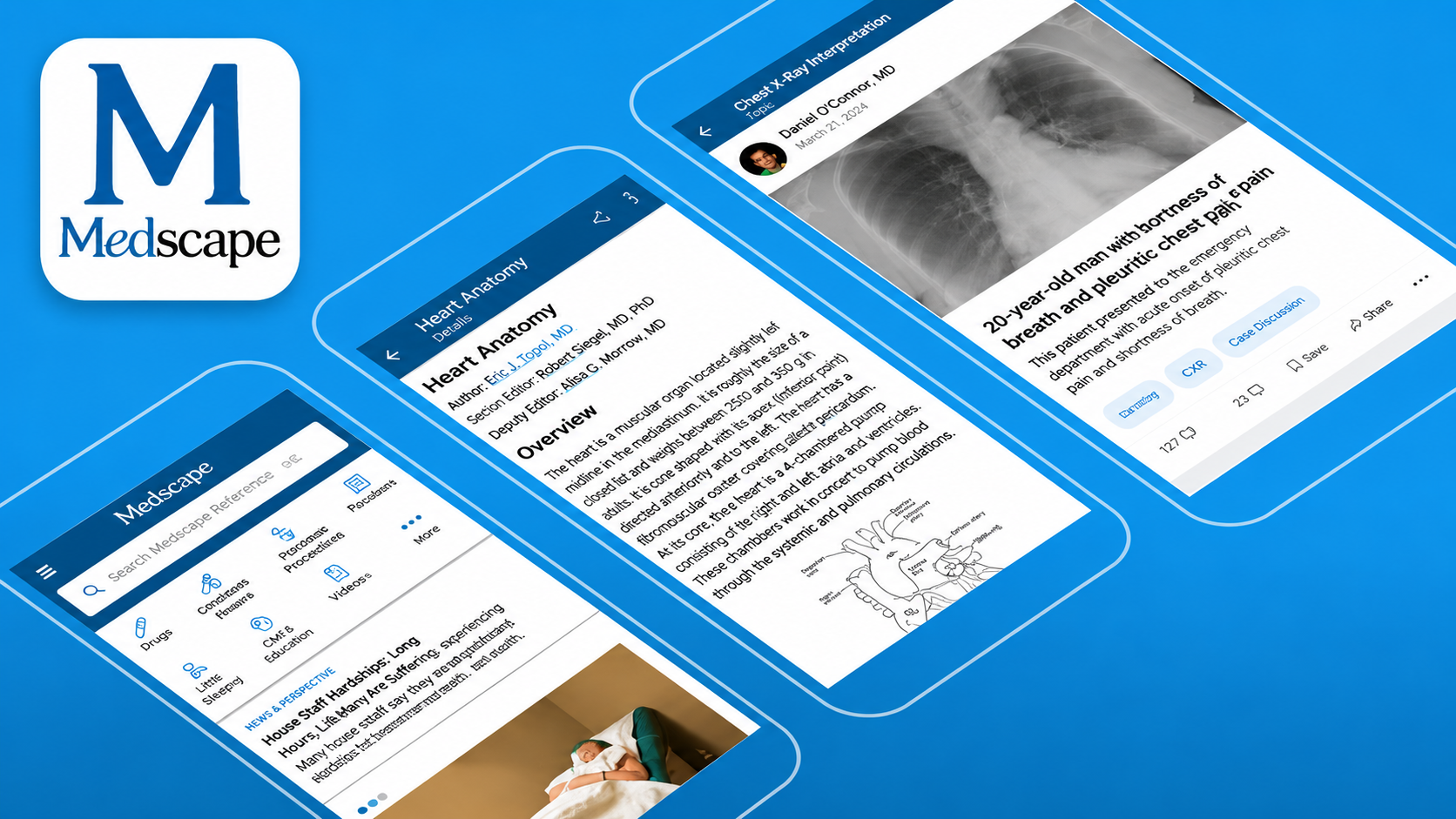
Medscape is one of the most comprehensive free medical apps available, combining a drug database covering more than 8,500 prescription and over-the-counter medications with a clinical news feed, CME activities, and reference articles across more than 30 specialties.
The drug database includes a visual pill identifier, drug interaction checker, and dosage calculator. Medscape also curates the latest research from peer-reviewed journals and presents it in a readable format, making it useful for physicians who want to stay current without managing multiple separate subscriptions.
While Medscape is free, its business model is advertising-supported, and pharmaceutical company-sponsored content appears alongside editorial content. Clinicians should be aware of this distinction when using Medscape for treatment decision support versus drug company-neutral resources like UpToDate or DynaMed.
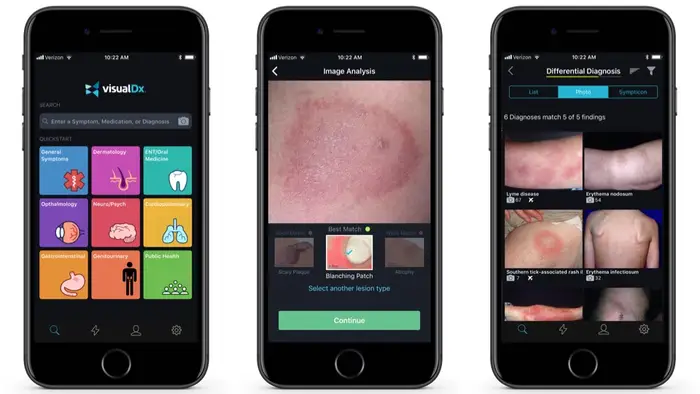
VisualDx is an image-based clinical decision support tool with a library of more than 40,000 medical images covering skin conditions, systemic diseases with visual presentations, and drug reactions. It is the only major clinical app that uses photographs as its primary diagnostic interface.
Physicians enter patient symptoms and demographics, and VisualDx generates a differential diagnosis list ranked by probability, each accompanied by reference images showing how the condition typically presents across different skin tones and disease stages. This is particularly valuable in dermatology, emergency medicine, and pediatrics.
VisualDx is also one of the leading apps for reducing diagnostic errors related to visual presentations in patients with darker skin tones, a recognized gap in traditional medical education. The app requires a subscription and is available in multiple languages.
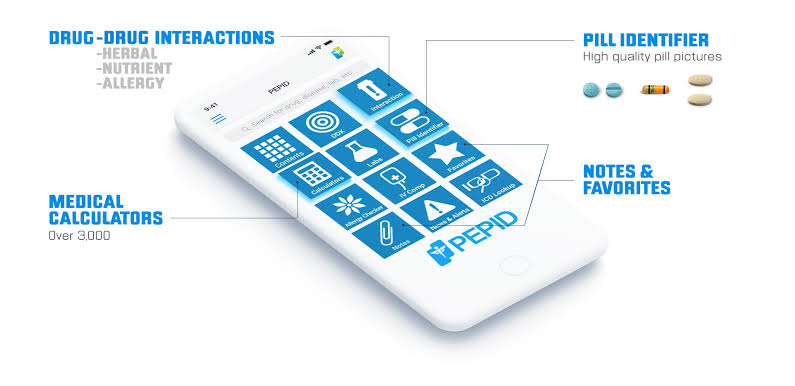
PEPID is a clinical reference app designed for fast-paced, high-acuity environments including emergency rooms, ambulances, and urgent care settings. Its interface prioritizes speed of retrieval over depth of content, presenting information in bullet-point format that can be read in seconds rather than paragraphs.
The app includes a medical drug database, clinical calculators, procedural illustrations, and instructional videos covering common emergency procedures. Push notifications deliver breaking clinical news and updated guidelines, keeping emergency physicians and paramedics current without requiring active research.
PEPID is available on iOS, Android, and Windows. It is particularly well-regarded among emergency medical technicians (EMTs) and paramedics as one of the few clinical apps designed with pre-hospital care workflows in mind, not just hospital-based physician practice.
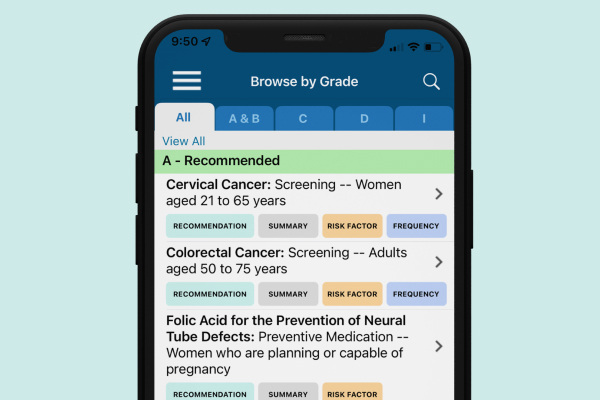
The Prevention TaskForce app is a free clinical tool developed by the U.S. Department of Health and Human Services and the Agency for Healthcare Research and Quality (AHRQ). It provides primary care physicians with the most current preventive care screening recommendations from the U.S. Preventive Services Task Force (USPSTF), updated in real time as new guidelines are issued.
A physician enters basic patient demographics, and the app generates a personalized list of recommended screenings, counseling services, and preventive medications with the supporting evidence grade for each recommendation. This makes annual wellness visits significantly more systematic and reduces the risk of missed preventive care opportunities.
The app is completely free, with no subscription required, and is available on iOS, Android, and as a web application. Healthcare organizations can also request API access to integrate USPSTF recommendations directly into their existing clinical workflows and electronic health record systems.
How to Choose the Right Medical App for Your Practice
The right medical app depends on the specific workflow problem you are trying to solve. Most physicians use more than one app across different use cases. A reasonable starting combination for 2026 is a communication platform (HosTalky), a drug reference (Epocrates or Lexicomp depending on specialty), a clinical calculator (MDCalc), and a comprehensive guideline resource (UpToDate or DynaMed).
| App | Primary Use Case | iOS | Android | Cost |
|---|---|---|---|---|
| HosTalky | Clinical team communication | ✓ | ✓ | Free |
| Epocrates | Drug reference | ✓ | ✓ | Free + Plus |
| DynaMed | Evidence-based clinical info | ✓ | ✓ | Subscription |
| Lexicomp | Drug + disease database | ✓ | ✓ | Subscription |
| MDCalc | Clinical calculators | ✓ | ✓ | Free + CME |
| UpToDate | Clinical guidelines | ✓ | ✓ | Subscription |
| Medscape | All-in-one reference | ✓ | ✓ | Free |
| VisualDx | Visual diagnosis | ✓ | ✓ | Subscription |
| PEPID | Emergency / pre-hospital care | ✓ | ✓ | Subscription |
| Prevention TaskForce | Preventive care screening | ✓ | ✓ | Free |
FAQs
What is the most used medical app by doctors in 2026?
Are medical apps for doctors HIPAA-compliant?
Can medical apps replace clinical judgment?
What is the best free medical app for doctors?
Which medical app is best for emergency medicine physicians?
Conclusion
The best medical apps for doctors in 2026 are not novelties but tools that directly reduce documentation burden, improve clinical decision-making speed, and close the communication gaps that remain one of the most persistent sources of medical error. Most physicians will find that a small stack of two to four well-chosen apps covers the majority of their daily workflow needs without the overhead of managing a large number of platforms.
For clinical teams looking to improve interprofessional collaboration and reduce communication-related errors, a purpose-built healthcare communication app like HosTalky addresses the coordination gap that drug reference and calculator apps are not designed to solve.
Sources and References
- Statista. (2023). Share of physicians using medical apps in the United States. statista.com
- Epocrates. (2026). About Epocrates. epocrates.com
- Wolters Kluwer. (2026). UpToDate: Evidence-based clinical decision support. wolterskluwer.com
- Ebbell, M. et al. (2022). Association of UpToDate use with hospital outcomes. Journal of the American Medical Informatics Association. jamia.com
- MDCalc. (2026). About MDCalc: Clinical decision support tools. mdcalc.com
- U.S. Department of Health and Human Services. (2026). Prevention TaskForce app. hhs.gov
- Agency for Healthcare Research and Quality. (2026). USPSTF Recommendations. ahrq.gov
- EBSCO Health. (2026). DynaMed: Evidence-based clinical information. ebsco.com
- Wolters Kluwer. (2026). Lexicomp: Clinical drug information database. wolterskluwer.com