

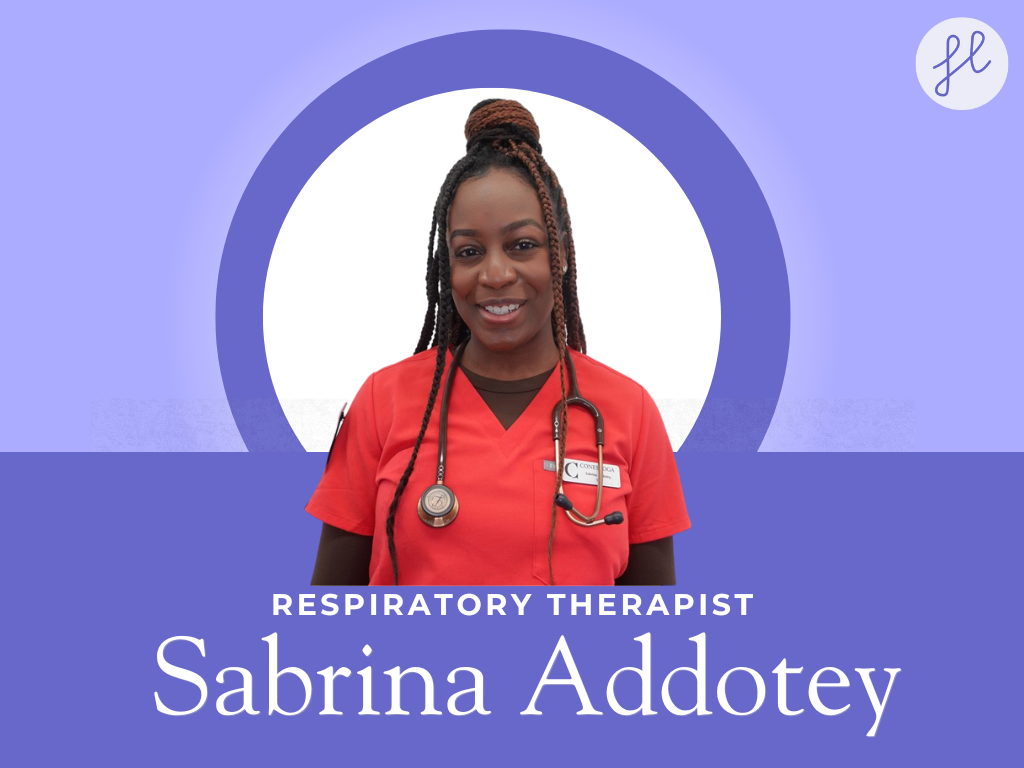
The Unsung Heroes of Healthcare: Meet the Respiratory Therapists
When most people picture a hospital care team, they think of doctors and nurses. But whenever a patient's breathing is at risk, there is usually another specialist at the bedside: the respiratory therapist (RT).
RTs are experts in the heart and lungs. They manage ventilators and airways, respond to breathing emergencies, and help patients of every age recover and breathe more easily. Yet the profession is still not widely understood.
Sabrina Addotey, a Registered Respiratory Therapist (RRT) in Toronto who has worked at SickKids and Unity Health, puts it this way:
"Many people are unfamiliar with the profession. We're rarely represented in media or TV shows, but our work is vital."
This guide explains what respiratory therapists do, where they work, and how to become one in Canada, with a short section on the U.S. pathway and firsthand insights from Sabrina throughout.
What is a respiratory therapist?
A respiratory therapist is a regulated healthcare professional who assesses, treats, and monitors people with breathing and cardiopulmonary problems. In Ontario, for example, the Respiratory Therapy Act defines the practice as providing oxygen therapy, monitoring cardio-respiratory equipment, and assessing and treating cardio-respiratory disorders to maintain or restore ventilation.
In Sabrina's words:
"We're responsible for the airway and breathing, especially in emergencies. We provide oxygen therapy, assess lungs, and manage ventilators. We help initiate, manage, and remove breathing tubes for patients on life support, and respond to acute situations to ensure effective ventilation.
Whether we use equipment or manual techniques, we get the job done. We work with everyone, from newborns to the elderly, in hospitals, rehabilitation clinics, and community care."
What does a respiratory therapist do day to day?
The exact tasks depend on the setting and the province or state, but common RT responsibilities include:
- Airway management, including helping place, maintain, and remove breathing tubes
- Mechanical ventilation, including setting up ventilators, adjusting settings, and weaning patients off ventilator support
- Non-invasive ventilation, such as CPAP and BiPAP
- Oxygen therapy and inhaled medications
- Arterial blood gas (ABG) sampling and analysis to measure oxygen and carbon dioxide levels
- Airway clearance, such as suctioning and chest physiotherapy to help remove mucus
- Pulmonary function testing to measure how well the lungs work
- Emergency response, including code blue and trauma teams, where the RT is often responsible for the airway
- Patient and family education, such as teaching inhaler technique or home ventilator use
Can respiratory therapists intubate?
In Ontario, yes. Intubation is one of the controlled acts the Respiratory Therapy Act authorizes RTs to perform. The Act also authorizes suctioning and administering substances by injection or inhalation. Some of these acts, including intubation, require an order from a physician or another authorized provider.
Scope varies. What an RT does in practice depends on the province or U.S. state, employer policy, and the individual RT's training. Check your own jurisdiction's regulator rather than assuming a national standard.
Where do respiratory therapists work?
RTs care for patients across the entire lifespan and in almost every part of the health system.
| Setting | What RTs do there |
|---|---|
| Adult ICU and critical care | Manage ventilators and airways, respond to deteriorating patients, support weaning |
| Emergency department and trauma | Secure airways, start ventilation, and support resuscitation |
| Neonatal and pediatric ICU | Support premature babies and children with breathing difficulties, including specialized neonatal ventilation |
| Operating room and anesthesia | Assist with airway management and anesthesia; some RTs train further as anesthesia assistants |
| Pulmonary function and sleep labs | Run lung function and sleep studies |
| Rehabilitation, home care and community | Support patients with chronic conditions such as COPD, home oxygen, or long-term ventilation |
| Education and simulation | Train students and staff |
"We make a significant difference across the lifespan, from newborns to end-of-life care."
Why is respiratory therapy so important?
When someone can't breathe effectively, every other system in the body is affected. RTs are trained to respond quickly to restore oxygenation and ventilation, reduce distress, and help prevent complications.
"RTs support patients with acute injuries or trauma by managing their breathing," Sabrina explains. "We help the body heal through airway support, mucus management, and proper ventilation strategies. We optimize recovery after injury or surgery and provide follow-up care in the community."
How do you become a respiratory therapist in Canada?
- Build a science foundation. RT programs typically expect prerequisite courses in subjects such as biology, chemistry, and math. Check each program's specific requirements.
- Complete an accredited respiratory therapy program. Canadian RT programs are a minimum of three years, offered as college diplomas or university degrees, with classroom learning and hospital clinical placements. Outside Quebec, programs are accredited through Accreditation Canada. Quebec programs are approved provincially.
- Pass the national certification exam. Graduates of accredited programs write the national exam administered by Health Professionals Testing Canada (HPTC), formerly known as the Canadian Board for Respiratory Care (CBRC).
- Register with your provincial regulator. In regulated provinces (Alberta, Saskatchewan, Manitoba, Ontario, Quebec, New Brunswick, Nova Scotia, Newfoundland and Labrador, and Prince Edward Island), the RRT credential is granted through the provincial regulatory college. In Ontario, that is the College of Respiratory Therapists of Ontario (CRTO). In British Columbia, Yukon, Nunavut, and the Northwest Territories, where the profession is not provincially regulated, the Canadian Society of Respiratory Therapists (CSRT) confers the RRT credential.
- Maintain your registration by meeting your regulator's quality assurance and continuing competence requirements.
Worth knowing: passing the national exam alone does not confer the RRT title. In regulated provinces the credential comes through provincial registration; in unregulated jurisdictions the CSRT confers it. This distinction is frequently blurred in career guides.
How is the path different in the United States?
The U.S. uses a different credentialing system.
| Canada | United States | |
|---|---|---|
| Minimum education | Accredited program of at least 3 years (diploma or degree) | Associate degree from a CoARC-accredited program; some employers prefer a bachelor's |
| National exam | HPTC national certification exam | NBRC Therapist Multiple-Choice (TMC) exam; a higher score also qualifies you for the Clinical Simulation Exam |
| Entry credential | RRT, via provincial regulator or CSRT | CRT after the TMC, or RRT after the TMC at the higher cut score plus the Clinical Simulation Exam |
| Right to practise | Provincial registration in regulated provinces | State license, required in every state except Alaska |
| Specialty credentials | Varies. Examples include the CSRT's Certified Clinical Anesthesia Assistant (CCAA) | NBRC specialties such as Adult Critical Care (ACCS), Neonatal/Pediatric (NPS), Pulmonary Function (RPFT), and Sleep Disorders (SDS) |
What can a respiratory therapist earn?
Canada. According to Job Bank, respiratory therapists in Canada usually earn between $30.16 and $51.00 per hour (CAD), with regional variation. The data was last updated in November 2025.
United States. The Bureau of Labor Statistics reports a median annual wage of $82,280 (USD) for respiratory therapists in May 2025. Employment is projected to grow 9% from 2025 to 2035, which BLS describes as much faster than average.
What career paths are open to respiratory therapists?
"RT offers diverse career paths: high-adrenaline acute care in the ICU or ER, or more routine, structured work in community settings," says Sabrina.
With experience, RTs can move into:
- Clinical specialization, such as adult critical care, neonatal and pediatrics, or pulmonary function
- Anesthesia assistance. In Canada, the CSRT administers the national Certified Clinical Anesthesia Assistant (CCAA) designation
- Education and research, including teaching in RT programs and simulation
- Leadership and management, such as clinical coordinator or department manager roles
- Advanced practice roles, where available
What advice does Sabrina have for future RTs?
"My biggest advice to students is to give it a try. Healthcare is a special yet critical place to work; you make a difference in people's lives despite the outcome.
Respiratory Therapy challenges you to think and act critically, and you become the expert of the cardiopulmonary system. It's a rewarding profession, so if you're interested, go explore it! Shadow an RT or attend an open house to see it in action!"
How do respiratory therapists fit into the care team?
RTs rarely work alone. In a single shift, an RT may coordinate with nurses on a ventilated patient's care, update a physician on blood gas results, respond to an urgent airway call, and hand off patients to the next shift. In time-critical moments such as a code, a deteriorating patient, or a ventilator alarm, how quickly the right RT gets the right information can matter a great deal.
That is why clear, fast communication between RTs, nurses, and physicians is so central to the role. Our guide on effective communication between healthcare professionals covers what makes that work in practice.
Why should more people know about respiratory therapy?
Despite their importance, RTs often work behind the scenes. Sabrina hopes to change that:
"Respiratory therapy is still a growing profession, but it's vital and impactful."
The next time you or someone you love takes an easy breath after an illness or surgery, there's a good chance a respiratory therapist helped make that possible.
Key Takeaways
- Respiratory therapists are regulated cardiopulmonary specialists who manage airways, ventilators and oxygen therapy across the lifespan.
- In Ontario, intubation is a controlled act authorized to RTs under the Respiratory Therapy Act, requiring an order from an authorized provider.
- Canadian RT programs run a minimum of three years, followed by the HPTC national exam and provincial registration.
- Passing the exam alone does not confer the RRT title; registration does, through a provincial college or the CSRT.
- Canadian RTs typically earn $30.16 to $51.00 per hour (CAD); the US median is $82,280 (USD) as of May 2025.
- Scope of practice varies by province, state and employer, so check your own regulator rather than assuming a national standard.
When an airway is at risk, the message has to land.
RTs work across units and teams, often arriving at the point where something is going wrong. HosTalky keeps clinical teams coordinated across those handovers and urgent calls, so the right person has the right information without chasing it.
Explore the Resources HubFAQs
What is the difference between a respiratory therapist and a nurse?
Registered nurses provide broad, whole-patient care across many conditions. Respiratory therapists specialize in the heart and lungs, with in-depth training in airway management, mechanical ventilation, and cardiopulmonary diagnostics. The two professions work closely together, especially in critical care.
Can a respiratory therapist intubate a patient?
In Ontario, intubation is one of the controlled acts authorized to RTs under the Respiratory Therapy Act, and it requires an order from an authorized provider. Scope varies by province, U.S. state, and employer.
How long does it take to become a respiratory therapist in Canada?
Canadian RT programs are a minimum of three years. After graduating, you write the national certification exam administered by Health Professionals Testing Canada (HPTC) and register with your provincial regulator, or with the CSRT in jurisdictions where the profession isn't regulated.
What is an RRT?
In Canada, RRT (Registered Respiratory Therapist) is the professional credential granted by a provincial regulatory college, or by the CSRT in unregulated jurisdictions. In the U.S., RRT is the advanced-level credential awarded by the National Board for Respiratory Care (NBRC). The entry-level NBRC credential is CRT (Certified Respiratory Therapist).
What is the difference between a CRT and an RRT in the U.S.?
Both are NBRC credentials. Candidates earn the CRT by passing the Therapist Multiple-Choice (TMC) exam at the lower cut score. Scoring at the higher cut score makes candidates eligible for the Clinical Simulation Exam, and passing both earns the RRT, which many hospitals prefer or require.
Where do respiratory therapists work?
RTs work in ICUs, emergency departments, NICUs and PICUs, operating rooms, pulmonary function and sleep labs, rehabilitation, home care, and education settings.
Sources & References
▾