

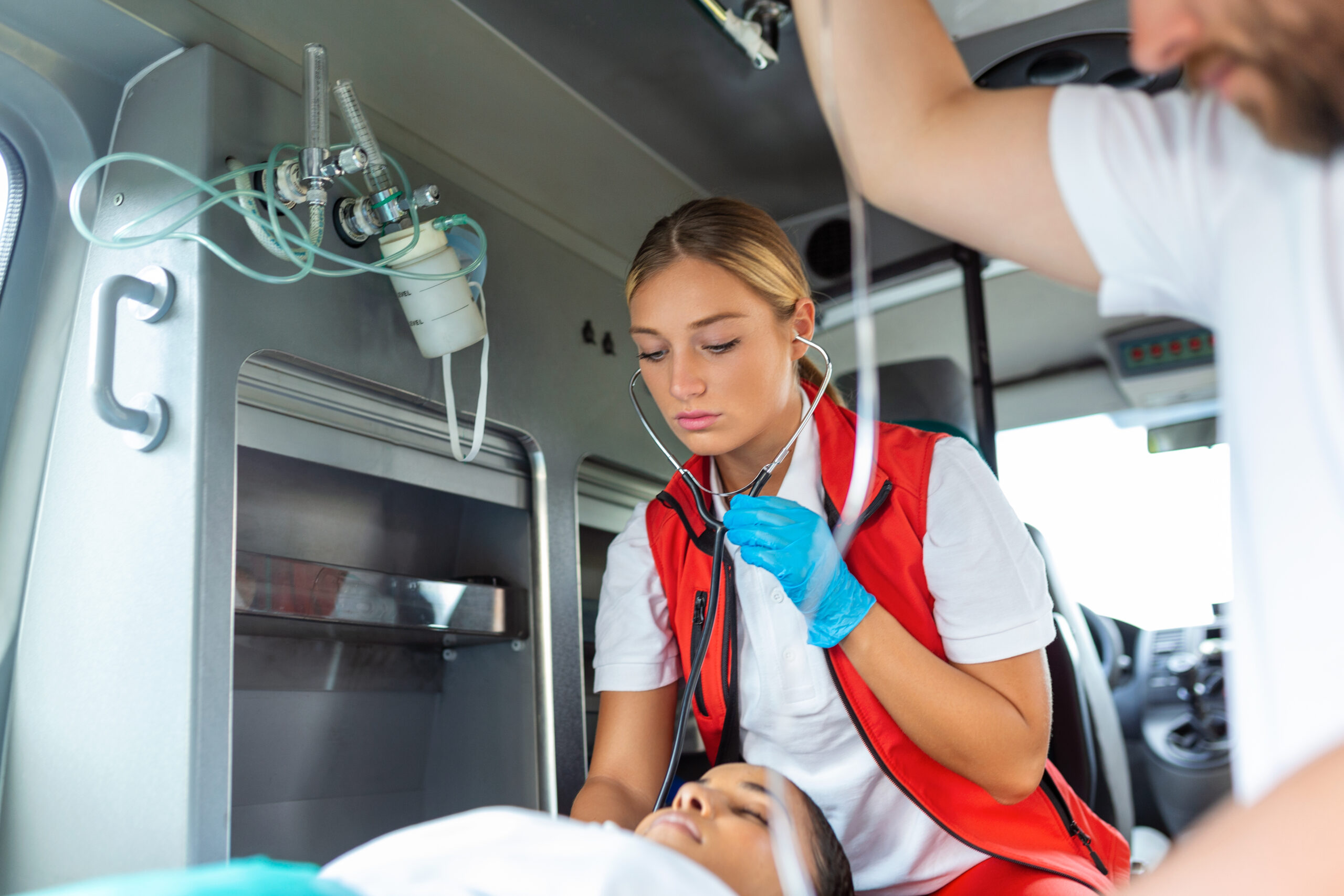
Are Nurses First Responders?
Legally and traditionally, nurses are not classified as first responders in most jurisdictions. That designation is reserved for EMTs, paramedics, firefighters, and others trained to respond directly at the scene of an emergency. But functionally, especially during disasters, public health crises, or in rural areas with no other help available, many nurses do exactly what a first responder does. Here's how the legal definition and the practical reality actually diverge.
- Legally, nurses are not typically classified as first responders. The designation is tied to those who respond directly at an emergency scene, such as EMTs and firefighters.
- Exceptions exist: school nurses, occupational health nurses, military and flight nurses, and community health nurses may functionally act as first responders.
- In disasters and mass casualty events, nurses deployed through DMATs, the Medical Reserve Corps, or Red Cross units do perform first-responder functions like on-site triage and wound care.
- The "first responder" classification carries real consequences: legal protections, hazard pay eligibility, priority PPE and vaccine access, and inclusion in emergency planning.
- The American Nurses Association and Emergency Nurses Association are advocating for broader recognition of nurses in emergency roles, with some state-level legislative efforts underway.
What Is a First Responder?
A first responder is typically defined as an individual who is among the first to arrive and provide assistance at the scene of an emergency. This includes EMTs, paramedics, firefighters, law enforcement officers, and public safety dispatchers. These professionals are trained to provide immediate, often life-saving interventions before a patient ever reaches a hospital, and the designation is tied to legal protections, certifications, and specific responsibilities.
The Federal Perspective
According to the U.S. Department of Homeland Security and FEMA, the term "first responder" does not typically include nurses, unless they are specifically deployed in emergency response roles outside of traditional clinical settings.
The Role of Nurses in Emergency Situations
While nurses may not always be first on the scene, their role in emergency care is no less critical.
Nurses in Emergency Departments
Emergency nurses are often the first point of contact once a patient reaches the hospital. Their responsibilities include triage and patient prioritization, stabilizing critical conditions, administering emergency medications, coordinating with EMTs and paramedics, and providing emotional support to patients and families. They don't usually respond in the field, but their rapid decision-making is vital the moment a patient arrives, and that handoff from field to ED is exactly where structured handover communication matters most.
Nurses in Disaster Response
In large-scale emergencies or mass casualty incidents, nurses may deploy as part of Disaster Medical Assistance Teams (DMATs), the Medical Reserve Corps (MRC), or Red Cross disaster response units. Registered nurses are explicitly named team members on federal DMATs, alongside physicians, paramedics, and pharmacists. In these roles, nurses genuinely do function as first responders, providing on-site triage, wound care, and crisis intervention.

A Legal and Practical Analysis
The short answer: not usually. In most jurisdictions, nurses aren't legally classified as first responders because they typically don't respond to emergencies in the field. They operate in controlled environments: hospitals, clinics, and long-term care facilities. But there are real exceptions.
In these contexts, nurses may fulfill the functional role of a first responder, even without the official designation.
Nurse vs. EMT: What's the Difference?
Both nurses and EMTs are dedicated to patient care, but their roles differ significantly. EMTs primarily provide immediate care to patients in transit to the hospital, while nurses take over responsibility once the patient arrives. Nurses also carry a broader scope of practice, including monitoring vital signs, administering medications, and assisting with procedures. That transition point is also where communication barriers most often surface between field and hospital teams.
| Aspect | Nurses | EMTs / Paramedics |
|---|---|---|
| Work Environment | Hospitals, clinics, long-term care facilities | Field settings, ambulances, disaster sites |
| Training Focus | Comprehensive patient care, long-term treatment | Emergency stabilization, rapid transport |
| Certification | RN, BSN, MSN, etc. | EMT-B, EMT-I, Paramedic |
| Scope of Practice | Broad, includes diagnostics and treatment | Focused on emergency care and transport |
| Legal Designation | Not typically first responders | Legally recognized as first responders |
When Nurses Act as First Responders
There are several real-world scenarios where nurses step directly into the first-responder role:
The Role of Nurses in Emergency Preparedness
As healthcare systems become more integrated with emergency services, the role of nurses is expanding. Many nurses now pursue certifications in Basic Life Support (BLS), Advanced Cardiac Life Support (ACLS), the Trauma Nursing Core Course (TNCC), and the Emergency Nursing Pediatric Course (ENPC). These certifications improve their ability to respond effectively both inside and outside the hospital, and some hospitals are piloting programs where nurses ride along with EMS teams, particularly in underserved communities or during peak crisis periods.
Why the distinction matters: "First responder" carries more than symbolic weight. It's tied to legal protections and benefits, priority access to vaccines and PPE during pandemics, eligibility for hazard pay and federal funding, and inclusion in emergency planning and drills. Recognizing nurses as first responders in specific contexts could mean real gains in support, resources, and training.
Advocacy for Change
Organizations like the American Nurses Association (ANA) and the Emergency Nurses Association (ENA) are actively advocating for broader recognition of nurses in emergency roles. Legislative efforts are underway in several states to formally include nurses in the first-responder category, particularly those working in emergency and disaster response.
Coordination Matters When Every Minute Counts
HosTalky gives nurses and emergency teams a secure, HIPAA-compliant way to communicate in real time, whether they're inside the ED or deployed in the field.
See How HosTalky WorksSo, Are Nurses First Responders?
Legally and traditionally, no. But functionally and practically, especially in times of crisis, many nurses do fulfill the role of a first responder. Their contributions to emergency care, disaster response, and public health are undeniable, and as the healthcare landscape keeps evolving, the definitions and recognition given to those on the front lines may need to evolve with it.
For more on how communication shapes outcomes in high-pressure care settings, see our roundup of must-read health communication journals.
FAQs
Why aren't nurses officially considered first responders?
Can nurses become first responders?
Do nurses receive first responder benefits?
Are emergency room nurses considered first responders?
Should nurses be recognized as first responders?
Sources and References
- U.S. Department of Homeland Security. Disasters and First Responder Guidance. dhs.gov
- Administration for Strategic Preparedness and Response (ASPR), U.S. Department of Health and Human Services. Disaster Medical Assistance Teams. aspr.hhs.gov
- American Nurses Association. nursingworld.org
- Emergency Nurses Association. ena.org