


The Nursing Symbol: History, Meaning & Symbols
The nursing symbol most commonly recognized in healthcare is the Caduceus — two serpents wrapped around a winged staff. Understanding the history and meaning behind this symbol, and how it differs from the Rod of Asclepius, is a hallmark of professional medical literacy.
Ever went to the hospital and wondered why the equipment and uniforms of the staff are stamped with a symbol of two snakes around a pole? Well, you may not be the only one to notice this and question what a snake has to do with medicine.
This symbol is known as the most recognized and oldest nursing symbol and is most commonly referred to as The Caduceus. It features two serpents wrapped around a staff with wings on both sides.
Scroll down to learn more about the history and significance behind this odd looking symbol.
What Is the Nursing Symbol?
It is a symbol that is most commonly referred to as the caduceus and is widely recognized amongst the other symbols used in nursing. The caduceus is the official crest of the United States Medical Corps, Navy Pharmacy Division, World Health Organization and the Public Health Service. It is internationally recognized as the symbol of health and medicine.
The Origin and History Behind the Symbol
The introduction of the caduceus dates well back to the 16th century. The early arrangement of the symbol consisted of an olive branch with leaves, which slowly evolved to a fork with two prongs wrapped around, which was later altered to have two snakes, as we now see it.
The creation of the caduceus dates back to ancient Greece, where messengers and heralds would often carry a caduceus to signify their peaceful missions. However, it is also presumed that the origination may be credited to "the Assyrians, Hittities, and Phoenicians".
According to Greek and Roman mythology, it is believed that the caduceus belonged to Hermes or Mercury, who the Romans addressed as "the messenger of the gods". The story goes that Hermes threw his rod at two snakes that were fighting, causing them to stop fighting and entwine themselves around the rod.
The Rod of Asclepius belonged to Aesculapius, who was recognized as the Greek god of healing. Thus, this story marks the origin of the caduceus as the symbol of solution and healing.
Significance and Usage of the Symbol
The caduceus is now universally acclaimed as the symbol of health and prosperity. It is used by multiple companies and organizations that focus on advocating and promoting healthcare. The serpent's habit of shedding symbolizes immortal life. Hence, the caduceus is seen on stethoscopes, lab coats, scrubs, hospitals, etc., because it is believed that the usage of the symbol would hopefully bring an improved quality of life to patients in need.
The History of the Lamp vs. The Caduceus
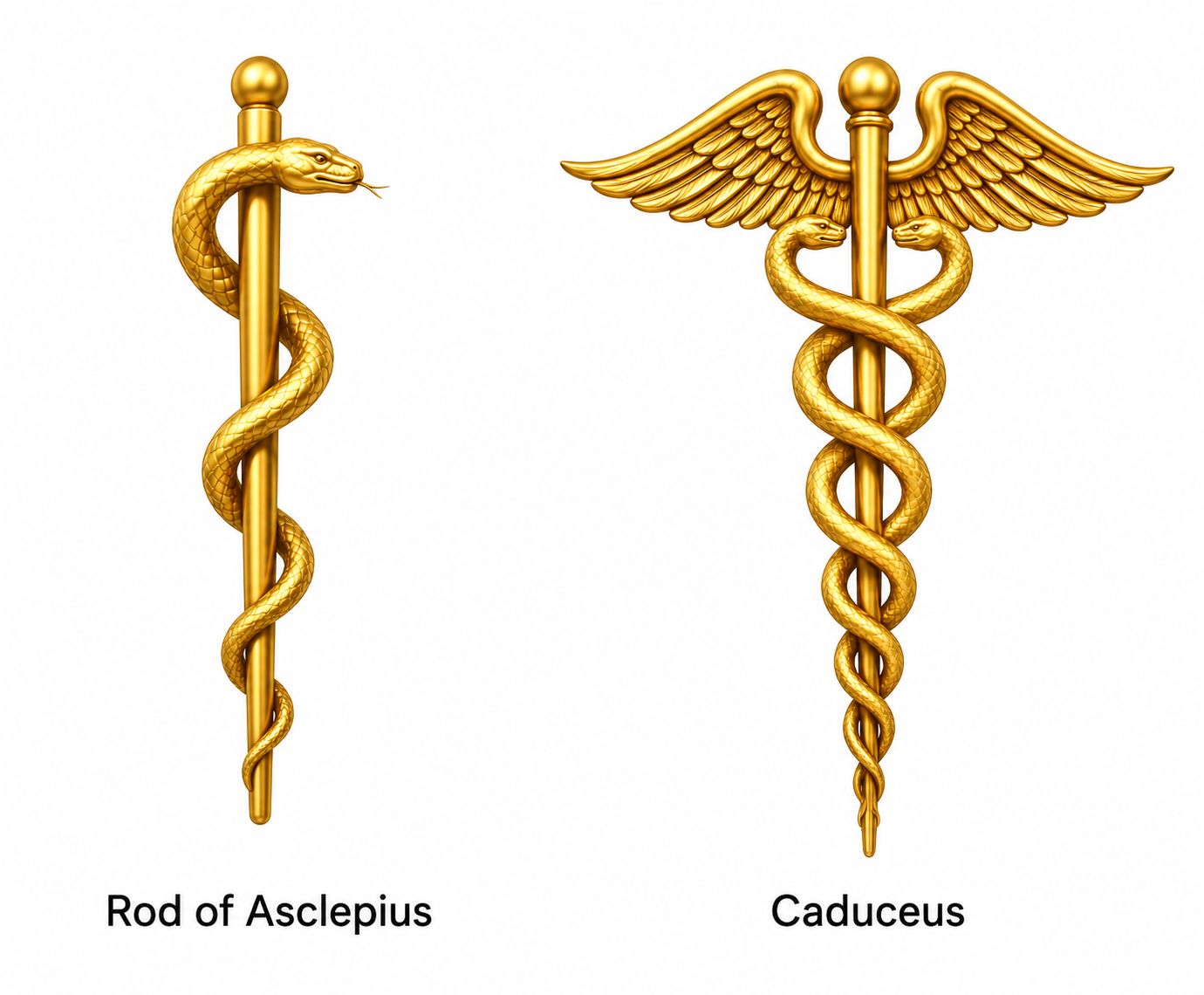
The Great Medical Misconception: Healing vs. Commerce
In the world of medical iconography, a single snake can make the difference between representing a healer and representing a merchant. While both symbols are ubiquitous in healthcare branding today, their origins and intended meanings are worlds apart. Understanding this distinction is a hallmark of professional medical literacy.
Rod of Asclepius
Single serpent on a rough staff. Symbol of the medical profession, used by WHO and AMA. Represents the patient-provider relationship and singular focus on health.
The Caduceus
Two serpents with wings. Staff of Hermes, the messenger god. Represents speed, negotiation, and commerce rather than clinical care.
The Rod of Asclepius: The Healer's Mark
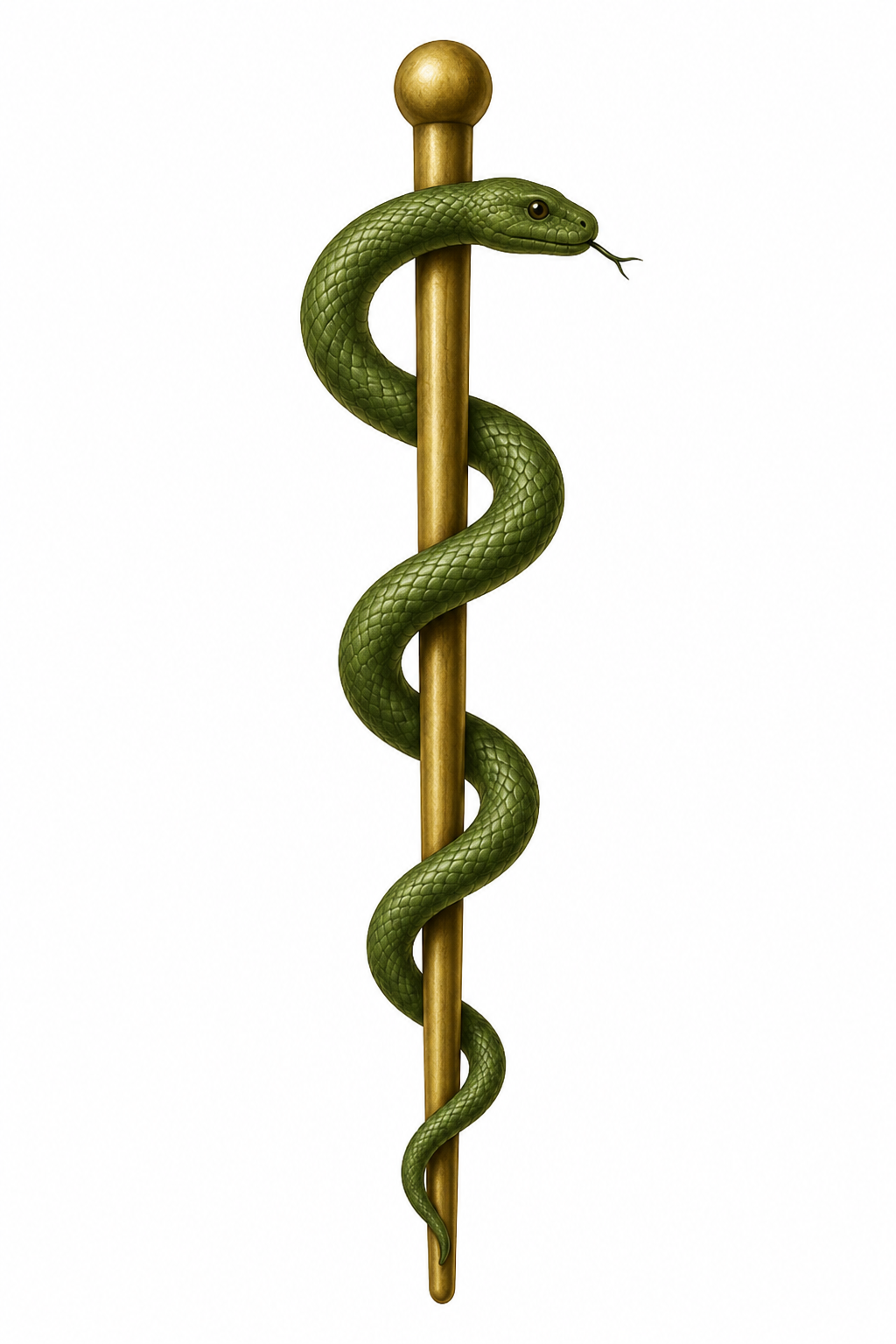
The true symbol of the medical profession is the Rod of Asclepius. Derived from Greek mythology, it features a single serpent entwined around a rough, knotty staff.
Asclepius was the son of Apollo and the deity specifically dedicated to the art of healing. In ancient times, the snake's ability to shed its skin was seen as a powerful metaphor for rejuvenation, recovery, and the renewal of life. This symbol remains the official emblem of major professional bodies, including the World Health Organization (WHO) and the American Medical Association (AMA), representing the patient-provider relationship and the singular focus on health.
The Caduceus: The Messenger's Staff
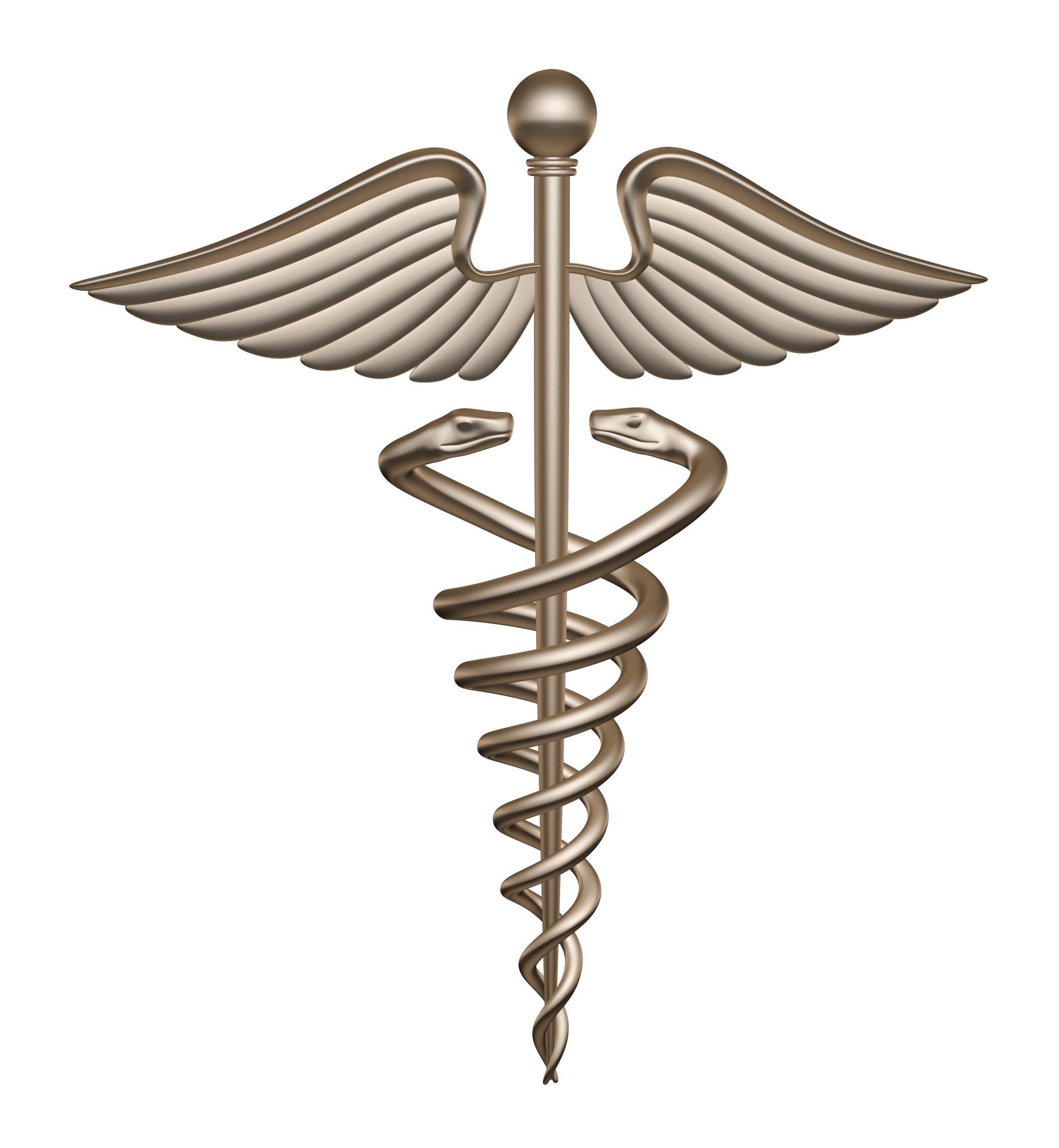
Conversely, the Caduceus featuring two serpents and a pair of wings is the staff of Hermes (the Roman Mercury). In mythology, Hermes was the messenger of the gods, the protector of travelers, and the patron of merchants and thieves. His staff represented speed, negotiation, and commerce rather than clinical care.
The Caduceus became linked to medicine in the early 20th century, largely due to its adoption by the U.S. Army Medical Corps. While visually striking and symmetrical, it technically denotes the administrative, commercial, and logistical side of healthcare rather than the act of healing itself.
Why the Distinction Matters for Nurses
For nursing students and healthcare professionals, using the Rod of Asclepius on patches, graduation invitations, or professional portfolios signals an adherence to medical tradition.
While the Caduceus is frequently seen in commercial pharmaceutical logos or military healthcare branding, the "True North" of clinical practice remains the single serpent of Asclepius.
Is the Nursing Symbol a First Responder Icon?
While the Rod of Asclepius is found on almost every ambulance and first responder "Star of Life" icon, the legal definition of a nurse as a "First Responder" depends on the setting.
- Clinical Definition: Nurses are often the "first" to respond to a Code Blue or emergency within a hospital setting.
- Legal Definition: In many regions, nurses are classified as first responders during declared disasters or when working in specialized Flight Nursing or ER roles.
- The Connection: The symbol represents the vocation of healing, which is why it is shared by EMTs, Paramedics, and Nurses alike.
01What is the nursing symbol?
02What is the difference between the Rod of Asclepius and the Caduceus?
03Where did the nursing symbol originate?
04Why is the nursing symbol on medical equipment?
05Is a nurse considered a first responder?
Conclusion
Congratulations, you are now an expert in the origin and history of the caduceus, more than many medical students nowadays. It is astonishing that serpents, which in Christian tradition commonly signify betrayal and lies, can be associated with immortality and healing in the field of medicine.
This proves to show that life all around us may look one-dimensional, but it is ultimately all in our perception. Maybe now, snakes don't sound as scary anymore.