


Why Pharmacy Technicians are the Unsung Guardians of Healthcare
In the complex ecosystem of modern healthcare, the spotlight often lands on diagnosing physicians or counseling pharmacists. But the silent engine driving the medication-use process, ensuring precision, safety, and speed, is the pharmacy technician.
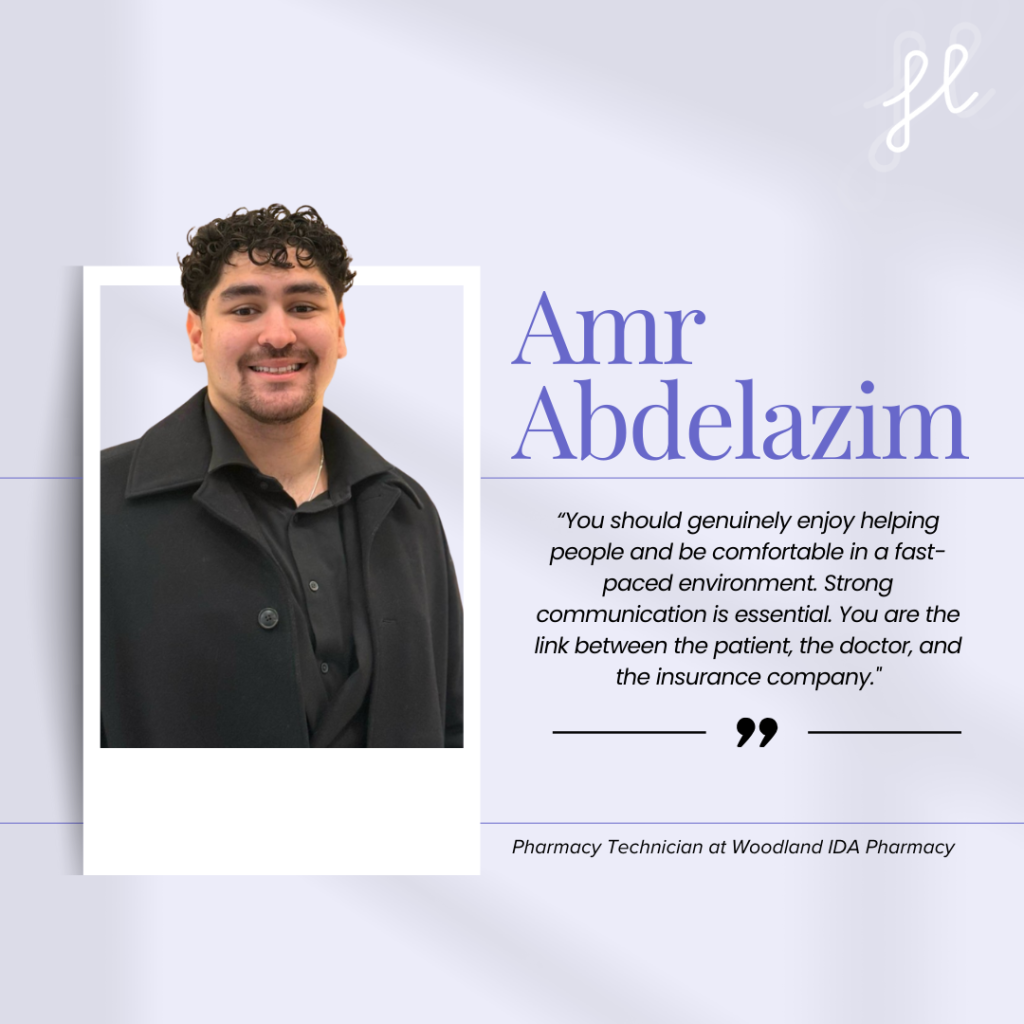
Far from just "filling bottles," pharmacy technicians are clinical facilitators who navigate the intersection of insurance logistics, patient advocacy, and medication safety. We sat down with Amr Abdelazim, a pharmacy technician at Woodland IDA Pharmacy, to pull back the curtain on this high-pressure profession.
- Pharmacy technicians are the first and last line of defense in the pharmacy workflow, not a clerical role.
- They catch drug interactions, manage insurance authorizations, and verify every prescription before it reaches a patient.
- The job demands both precision and emotional intelligence, patients are often stressed, unwell, or facing real financial pressure.
- Becoming one in Canada requires an accredited program, a certification exam (often PEBC), and hands-on training.
What a Pharmacy Technician Actually Does
A common misconception is that the role is purely clerical. In reality, a technician is the first and last line of defense in the pharmacy workflow.
"I help make sure people get the medications they need safely and on time. I work behind the counter processing prescriptions, helping patients choose the right over-the-counter medications, and solving problems when things don't go smoothly, like insurance hurdles or missing clinical information."
Key Responsibilities
- Precision processing: accurately entering complex prescriptions to prevent dosage errors
- Clinical support: identifying potential drug-to-drug interactions that may be missed during a brief doctor's visit
- Logistics management: troubleshooting prior authorizations and insurance red tape that could otherwise delay treatment
- Patient education: guiding patients through over-the-counter options
A Day in the Life
The pharmacy environment is a masterclass in controlled chaos. For Amr and his team, the challenge lies in maintaining near-total accuracy while processing hundreds of orders daily.
"It's very fast-paced, you're often juggling multiple high-priority tasks at once. Every step involves rigorous verification. We have access to the patient's full medication history, something doctors don't always see, which allows us to catch discrepancies before they reach the patient."
This detail-oriented focus turns a simple transaction into a healthcare intervention. In a field where a decimal point error can have life-altering consequences, precision isn't optional.
How Technicians Improve Patient Outcomes
By managing the technical and operational complexities of the pharmacy, technicians free pharmacists to focus on high-level clinical checks and direct patient counseling.
"Pharmacy technicians play a massive role in patient safety. We manage the operational noise so the pharmacist can focus on the clinical nuances."
| Step | What Happens |
|---|---|
| Verification | Cross-referencing labels against original prescriptions |
| Insurance advocacy | Navigating plan limitations so patients don't walk away empty-handed |
| Efficiency | Reducing wait times without compromising safety checks |
The Hidden Challenge: Emotional Labor
Beyond technical skill, the role demands real emotional intelligence. Patients visiting a pharmacy are often stressed, unwell, or dealing with the financial burden of chronic illness.
"There's a lot of emotional labor involved. You have to stay calm and compassionate even when a patient is frustrated by an insurance delay that is out of your control."
Navigating insurance is its own skill. Technicians memorize the intricacies of different providers, understanding which medications require prior authorization and how to bridge the gap between a doctor's order and what a plan will actually cover.
Thinking of a Career in Pharmacy?
In Canada, the path typically involves:
- Formal education: completing an accredited pharmacy technician program
- Certification: passing a regulatory exam, such as the PEBC exam required in many provinces
- Hands-on training: practical placements to master pharmacy software and safety protocols
"You should genuinely enjoy helping people and be comfortable in a fast-paced environment. Strong communication is essential. You are the link between the patient, the doctor, and the insurance company."
The Same Precision, Built Into Every Note
HosTalky brings structured, accurate documentation to every healthcare team, so more time goes to patients, not paperwork and insurance back-and-forth.
Try AI Scribe FreeThe Bottom Line
The next time you pick up a prescription, remember that small bag is the result of a rigorous, multi-step safety process. Pharmacy technicians like Amr are more than support staff, they're essential healthcare professionals who keep the system functioning and patients safe.
FAQs
What does a pharmacy technician actually do?
A pharmacy technician processes prescriptions accurately, identifies potential drug interactions, manages insurance authorizations, and guides patients through over-the-counter medication choices. They act as the first and last line of defense in the pharmacy workflow, not just a clerical role.
Is a pharmacy technician the same as a pharmacist?
No. Pharmacists provide clinical counseling and final approval on prescriptions. Pharmacy technicians handle the operational and logistical work, prescription processing, insurance navigation, and verification, that allows pharmacists to focus on higher-level clinical decisions.
How do you become a pharmacy technician in Canada?
The typical path involves completing an accredited pharmacy technician program, passing a regulatory certification exam such as the PEBC exam required in many provinces, and completing hands-on training placements to master pharmacy software and safety protocols.
What personal qualities make a good pharmacy technician?
Strong communication skills, genuine enjoyment of helping people, and comfort working in a fast-paced environment. The role also demands real emotional intelligence, since patients are often stressed or facing financial pressure over medication costs, and technicians serve as the link between the patient, the doctor, and the insurance company.