


AI Scribe vs ChatGPT for Clinical Notes
More clinicians are using AI to help with documentation, and many have wondered whether a general-purpose tool like ChatGPT can do the job of a dedicated AI scribe.
The bigger differences are in the workflow around the model, the data agreements, and the safeguards, rather than in the AI model itself. And every AI tool studied so far still needs a clinician to review its notes.
This guide compares the two approaches on accuracy, workflow, and privacy, using published research and current vendor documentation.
Dedicated AI scribes are built to turn clinical encounters into structured notes inside a healthcare workflow. ChatGPT is a general-purpose assistant. Consumer versions of ChatGPT shouldn't be used with patient information because OpenAI won't sign a Business Associate Agreement (BAA) for them. OpenAI does now offer healthcare tiers that support HIPAA compliance. No AI tool in the published studies produced error-free notes, so clinician review is essential either way.
What's the difference between an AI scribe and ChatGPT?
An AI scribe (sometimes called an AI medical scribe or ambient scribe) is software designed for one job: turning a clinical encounter into a draft note. Most capture audio, either by listening to the visit (ambient) or from the clinician's dictation, then transcribe it. A large language model then organizes the content into a format such as a SOAP note (Subjective, Objective, Assessment, Plan).
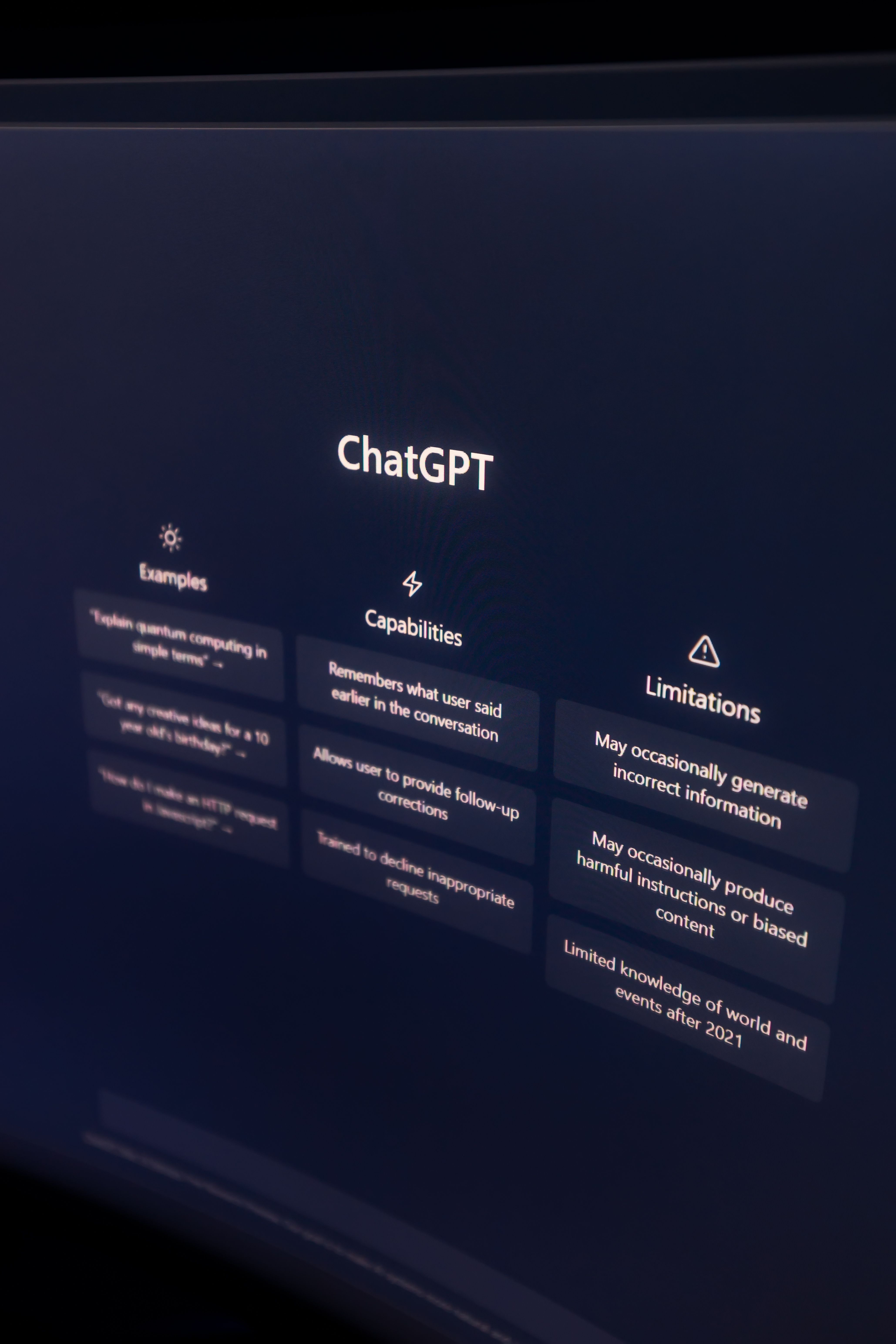
ChatGPT is a general-purpose AI assistant from OpenAI. It can write a SOAP-style note if you give it a transcript or summary, but it isn't built around clinical workflows. The clinician has to supply the input, write the instructions, and move the output into the record.
Many AI scribe products are themselves built on large language models. So the meaningful differences usually come from what surrounds the model:
- Audio capture and medical speech recognition
- Clinical templates and instructions tuned for documentation
- Review and editing tools
- Data contracts and security controls
- Integration with the clinic's systems
How do AI scribes and ChatGPT compare?
| Dedicated AI scribe | Consumer ChatGPT (Free, Plus, Pro, Business) | ChatGPT for Healthcare / Enterprise with BAA | |
|---|---|---|---|
| Built for | Clinical documentation | General tasks | Healthcare organizations' clinical, research, and administrative work |
| Input | Usually captures audio and transcribes it automatically | Clinician pastes in a transcript or summary | Depends on how the organization deploys it |
| Note structure | Clinical templates such as SOAP or specialty formats | Depends on the user's prompt | Depends on the deployment |
| Patient data (HIPAA) | Depends on the vendor; ask for a BAA and security documentation | Not eligible for a BAA, so don't enter patient information | BAA available for eligible products; still requires correct configuration |
| EHR integration | Varies widely; some write notes directly to the EHR, others need copy-and-paste | None | Depends on the deployment |
| Published accuracy evidence | Several independent studies; none found error-free notes | One widely cited study, using a 2023 version of GPT-4, found many errors | Little published evidence specific to these tiers yet |
| Clinician review needed? | Yes | Yes | Yes |
How accurate is ChatGPT at writing clinical notes?
The most cited study tested ChatGPT-4 on 14 simulated outpatient encounters. Researchers gave it transcripts and asked it to produce SOAP notes, generating three versions of each:
- Errors were frequent. There was an average of 23.6 errors per clinical case.
- Most errors were omissions. 86% of errors were missing information, 10.5% were additions not supported by the transcript, and 3.2% were incorrect facts.
- Results varied widely. Accuracy and note quality changed substantially between the three versions of the same case.
The authors concluded that the notes didn't meet the standards required for clinical use.
Two caveats matter: the study used the publicly available ChatGPT-4 from 2023, and models have changed since. It also wasn't a head-to-head comparison: it didn't test any AI scribe products, so it can't show how ChatGPT compares with them directly.
How accurate are dedicated AI scribes?
Better in several studies, but not error-free:
- Seven commercial scribes, U.K. A study of seven commercial clinical AI scribes across eight simulated primary care consultations found that no product produced error-free summaries. Omissions made up 83.8% of errors, and performance varied widely between products, from a median of 1 to 6 omissions per consultation depending on the scribe. The researchers deliberately excluded general-purpose tools like ChatGPT.
- A suite of scribes, Toronto. A competitive analysis of several AI scribes used in Canadian and U.S. primary care found they produced "good to excellent" notes in about one minute for a 15-minute encounter. None were consistently error-free. Common errors included omissions, deletions, and misplaced content in the wrong SOAP section.
- 11 scribes vs. human note-takers, U.S. VA. A Veterans Health Administration evaluation in the Annals of Internal Medicine compared 11 AI scribe tools with 18 human note-takers on five standardized primary care cases. Human-written notes scored higher in all five cases. The biggest gap was in an acute low back pain case (43.8 vs. 20.3 out of 50). AI notes scored lower on being thorough, organized, and useful.
- Four scribes vs. humans, Australia. A smaller Australian study of four commercial AI scribes found the top scribes outperformed human documentation in simulated general practice consultations.
The research doesn't show that every AI scribe is better than every general model. What it shows is that quality varies widely between products, and independent evaluation and clinician review matter more than the product category.
Do AI scribes actually save time?
Real-world studies suggest they can:
- Sweden. In a European health system where 1,295 clinicians generated 236,153 notes with an AI scribe, documentation time per note was estimated to fall from 6.69 to 4.72 minutes (29%). Sustained users also reported less administrative stress and more presence with patients. The time estimate came from a survey of 177 fully onboarded clinicians, and several authors work for the scribe's vendor.
- United States. Earlier U.S. studies reported reductions in EHR time and in clinician-reported burnout after adopting ambient AI scribes.
Also read: How AI Can Help Write SOAP Notes
Can you use ChatGPT with patient information?
It depends on which version.
- Consumer and self-serve tiers: no. These are ChatGPT Free, Plus, Pro, and self-serve Business. OpenAI doesn't offer a BAA for them, so they shouldn't be used to process protected health information (PHI) for a U.S. covered entity.
- Healthcare and enterprise tiers: possibly. In January 2026, OpenAI launched ChatGPT for Healthcare. According to OpenAI, it offers a BAA, audit logs, data residency options, and customer-managed encryption keys, and content isn't used to train models. OpenAI's HIPAA documentation also lists ChatGPT for Clinicians, ChatGPT Enterprise with a Regulated Workspace, and the API with modified retention as eligible under a BAA.
Worth being precise about: a BAA doesn't make a tool HIPAA compliant on its own. Compliance also depends on configuration, access controls, policies, and how staff use the tool. The same applies to AI scribe vendors: ask for a BAA, and review their security, data retention, and model-training policies.
Also read: Are AI Medical Scribes HIPAA Compliant?
When might each option make sense?
| Situation | Better fit |
|---|---|
| Routine documentation of patient visits | A dedicated AI scribe your organization has vetted |
| Your organization has deployed ChatGPT for Healthcare under a BAA | Follow its approved use policy, including whether clinical notes are permitted |
| Drafting templates, patient education handouts, or policies with no patient information | A general tool such as ChatGPT can help |
| Teaching students how SOAP notes are structured, using fictional cases | A general tool, with clear warnings about errors |
| Any task involving real patient information on a personal ChatGPT account | Neither. Don't do it. |
What should you check before using any AI for clinical notes?
- Privacy. Will the vendor sign a BAA? Where is data stored, and for how long? Is it used to train models?
- Patient consent. Does your organization, or your state or province, require consent before recording a visit?
- Evidence. Has the tool been independently evaluated, ideally in a setting like yours?
- Workflow. How does the note get into the record? Is it written directly to the EHR, or copied and pasted?
- Review. Make sure every note is checked before signing. Pay particular attention to the most common error types: omitted details (especially medications and psychosocial history), statements the patient never made, and content in the wrong SOAP section.
Also read: AI Scribes, PHI, and Healthcare Data Security
Where does HosTalky AI Scribe fit?
HosTalky AI Scribe is a voice-powered documentation assistant. Clinicians speak, and it turns their speech into structured SOAP-style or custom notes from a mobile device, for clinicians to review and edit. A free plan is available, so clinicians can see how it fits their workflow.

Turn your spoken notes into structured SOAP notes.
HosTalky AI Scribe is a voice-powered documentation assistant you can try on the free plan. You review and edit every note before it's final.
Try HosTalky AI ScribeKey Takeaways
- The biggest differences between AI scribes and ChatGPT are workflow, data agreements, and safeguards, not the underlying model.
- Consumer ChatGPT tiers aren't eligible for a BAA, so don't use them with patient information.
- OpenAI's healthcare and enterprise tiers can offer a BAA, but correct configuration and use still matter.
- No AI scribe or general model in published studies produced consistently error-free notes; omissions are the most common error.
- There's no head-to-head study of current AI scribes and ChatGPT, so independent evaluation and clinician review matter most.
FAQs
Can I use ChatGPT to write SOAP notes?
Not with real patient information on a consumer account, because OpenAI doesn't offer a BAA for those tiers. If your organization has deployed a HIPAA-eligible version such as ChatGPT for Healthcare under a BAA, follow its approved use policy. Either way, every note needs clinician review.
Is ChatGPT HIPAA compliant?
Consumer and self-serve ChatGPT tiers aren't eligible for a BAA and shouldn't be used with PHI. OpenAI offers BAAs for certain products, including ChatGPT for Healthcare, ChatGPT Enterprise with a Regulated Workspace, and the API with modified retention. Even then, compliance depends on correct configuration and use.
Are AI scribes more accurate than ChatGPT?
There's no published head-to-head comparison of current versions. A 2024 study found many errors in notes from a 2023 version of ChatGPT-4. Studies of dedicated scribes generally report better note quality, but none found error-free notes, and performance varies widely between products.
Do AI scribes integrate with the EHR?
Some do, and some don't. Integration ranges from writing notes directly into the record to simple copy-and-paste, so ask each vendor how notes reach your EHR.
Do clinicians still need to review AI-generated notes?
Yes. No AI scribe or general AI model in the published studies produced consistently error-free notes. Omissions are the most common error. The clinician remains responsible for the final note.
What are the most common errors in AI-generated clinical notes?
Omissions are by far the most common: 83.8% of errors in one multi-product study, and 86% in the ChatGPT-4 study. Other errors include added information that wasn't said, incorrect facts, and content placed in the wrong SOAP section.
What is ChatGPT for Healthcare?
It's an enterprise version of ChatGPT that OpenAI launched in January 2026 for healthcare organizations. According to OpenAI, it offers a BAA, audit logs, data residency options, and customer-managed encryption keys, and content isn't used to train models.
Disclaimer: This article is for educational purposes and doesn't constitute legal or compliance advice. Organizations should evaluate AI documentation tools with their privacy, compliance, and clinical leadership, and confirm current vendor terms directly.
Resources
▾