


5-Minute Stress Relief EFT Tapping for Healthcare Workers
You've just finished a code that didn't go well. Your heart is racing, your hands are shaking, and you have six hours left on shift. You need something that works now, doesn't require leaving the unit, and doesn't depend on a quiet room you don't have.
EFT tapping, or Emotional Freedom Techniques, is one option. It takes about five minutes, costs nothing, and needs no equipment. It also comes with a research literature that is more mixed than most articles about it admit, and you deserve an accurate account of both.
EFT tapping is a five-minute self-administered technique combining acupressure, naming a stressor, and controlled attention. Evidence supports reductions in self-reported distress, but which ingredient does the work is unresolved. Treat it as a low-risk adjunct for acute stress, not a treatment for a clinical condition.
What is EFT tapping?
EFT combines three things: naming a specific stressor out loud, tapping with your fingertips on a fixed sequence of body points, and re-rating your distress afterwards. A round takes a few minutes.
It is best understood as a self-administered somatic and cognitive technique. It is an adjunct for acute stress regulation, not a treatment for clinical anxiety, depression or PTSD, and not a substitute for professional care.
Does the research support it?
Multiple randomised controlled trials and meta-analyses report reductions in self-reported anxiety, depression and PTSD symptoms after EFT. A frequently cited randomised trial (Church, Yount & Brooks, Journal of Nervous and Mental Disease, 2012) found salivary cortisol fell 24.4% in an EFT group versus 14.3% after supportive counselling and 14.4% with no treatment. A 2020 replication by Stapleton and colleagues found a larger reduction.
What that study does not show. Two details matter and are routinely dropped. The participants were 83 non-clinical volunteers, not healthcare workers. And the intervention was a one-hour session with a certified EFT practitioner, not five minutes of self-tapping between patients.
What remains genuinely unresolved
The open question is which ingredient does the work. EFT bundles acupressure with exposure, cognitive reframing, controlled breathing and focused attention, all of which have independent evidence behind them. Dismantling studies using sham tapping points have produced mixed results, and reviewers in the field openly call for better-powered trials and reduced investigator allegiance, since much of the EFT literature is produced by researchers with commercial ties to EFT training.
What this means practically
If tapping helps you, the mechanism doesn't especially matter. It is low-risk, free, and takes five minutes. Just don't expect it to treat a clinical condition, and be sceptical of anyone selling certification on the strength of the cortisol number.
The tapping sequence
Step 1: Name the specific stressor (30 seconds)
Be concrete. "Even though that family member shouted at me" works better than "even though I'm burned out." Specific targets produce better results than general overwhelm.
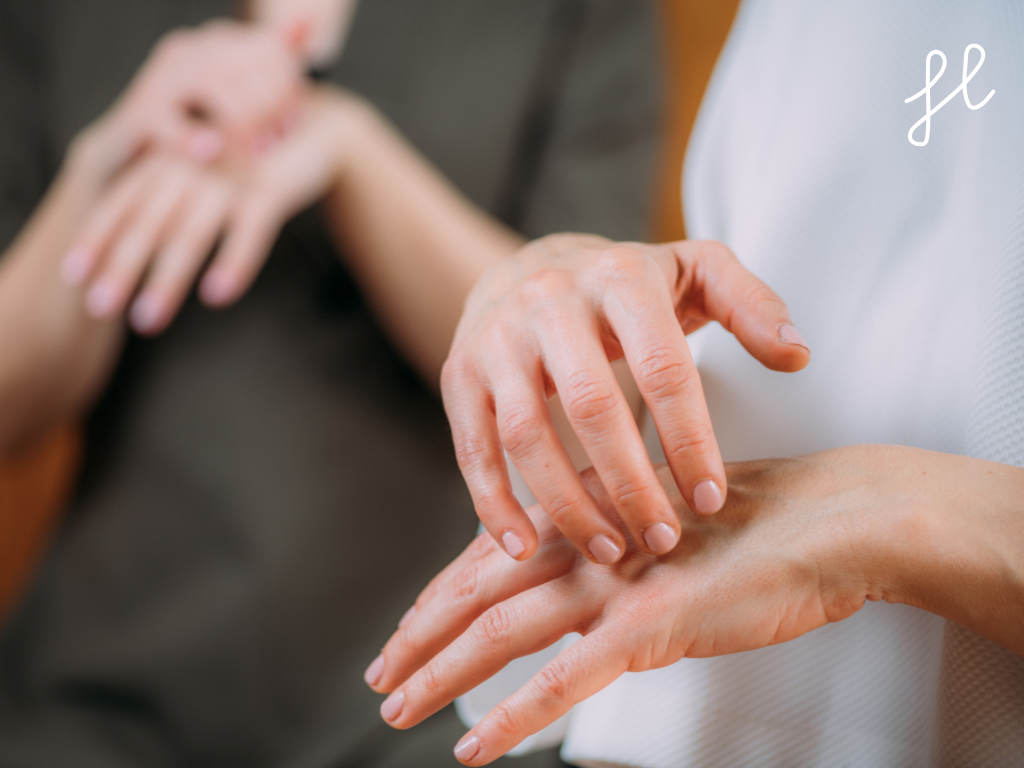
While repeating your statement three times, tap continuously on the karate chop point. This is the fleshy outer edge of your hand between wrist and little finger.
Step 2: Tap the sequence (3 to 4 minutes)
Using two or three fingers, tap gently about five to seven times on each point while repeating a short reminder phrase:
- Top of head (crown)
- Eyebrow (inner end, near the nose)
- Side of eye (on the bone at the outer corner)
- Under eye (on the bone below the pupil)
- Under nose (between nose and upper lip)
- Chin (crease between lower lip and chin)
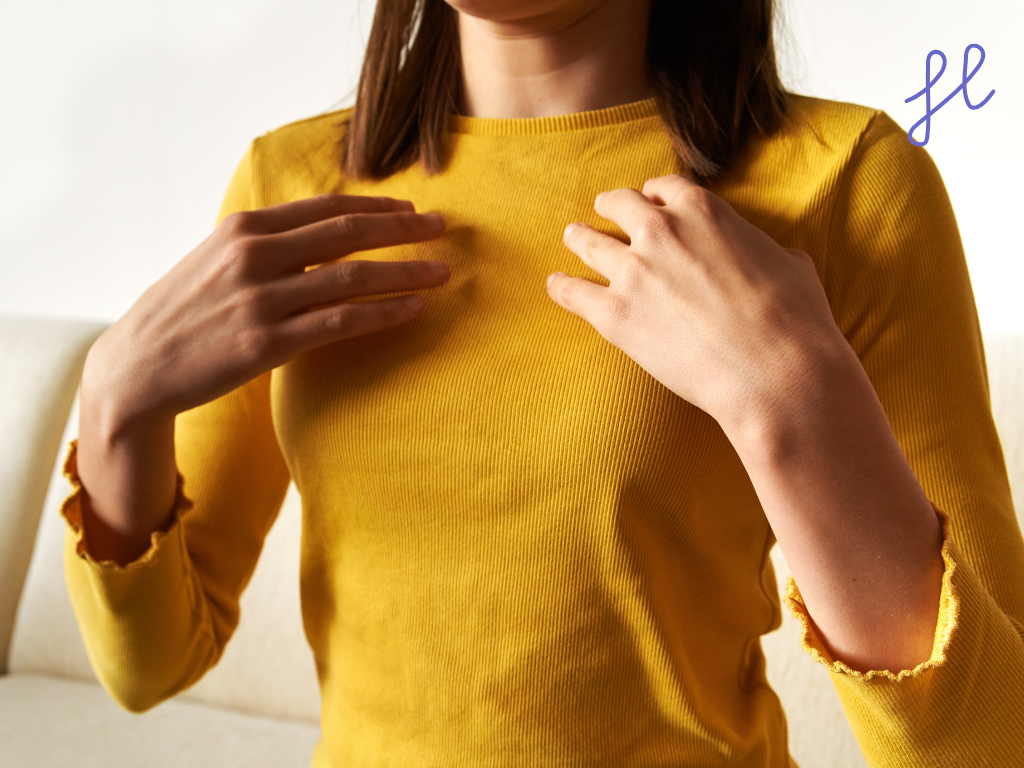
- Collarbone (where sternum, collarbone and first rib meet)
- Under arm (roughly 10 cm below the armpit)
Return to the top of the head and repeat for two to three rounds.
Step 3: Re-rate (30 seconds)
Rate your distress 0 to 10. Many people report a drop of a few points after one session. If distress is still high, run more rounds.
On-shift adaptations: tapping without touching your face
Five of the eight points are on the face. Don't tap facial points during patient care. Face-touching is a well-established infection control concern, and it doesn't stop being one because you're stressed. It's also incompatible with PPE.
Use the below-the-neck subset instead:
| Situation | Points to use |
|---|---|
| On the unit, hands not recently washed | Karate chop, collarbone, under arm |
| Wearing PPE | Karate chop point only, or finger points (sides of fingernail beds) |
| Between patients, after hand hygiene | Full sequence if you have privacy |
| Off the unit: car, break room, home | Full sequence |
The collarbone point is the most useful single point on shift: reachable through scrubs, unobtrusive, and it looks like adjusting a badge.
Do the full version off the clock. Facial points after hand hygiene, in your car or at home. Treat the abbreviated version as the on-shift tool and the full version as the real practice.
Why it suits healthcare work specifically
It works in noisy environments. Meditation apps and guided breathing generally assume quiet and privacy. Tapping doesn't.
It targets physical stress symptoms. Healthcare stress shows up in the body as jaw tension, tight shoulders, headaches, nausea. A technique involving physical action addresses that more directly than a purely cognitive one.
It handles accumulation. Healthcare workers rarely have one identifiable trauma. It accrues: the patient who resembled your mother, the procedure that went wrong, the shift where staffing made good care impossible. Tapping targets specific incidents one at a time, which suits that pattern.
It's private and free. No app, no booking, no disclosure, no manager's permission.
What it won't fix
Tapping is a stress response tool. It does nothing about staffing ratios, documentation load, mandatory overtime or a unit culture that treats breaks as optional. Those are the actual drivers of chronic exhaustion in healthcare, and no five-minute technique touches them.
If you're tapping every shift just to get through it, the technique is working and your working conditions still aren't. Those are separate problems with separate solutions. See our guides on compassion fatigue and burnout and workplace stressors.
Practical tips
- Learn it when calm. Practise the point sequence before a shift or at lunch, not mid-crisis. Skills rehearsed in low-stress states are more accessible under pressure.
- Use your own words. If you don't say "overwhelmed," don't say it. "Done with this" or "can't take another admission" works better if that's your language.
- One stressor at a time. Not "everything is terrible."
- Pair it with speaking up. Lowering the emotional charge around an unsafe assignment can make it easier to raise it. Managing your stress response isn't the same as accepting the conditions causing it.
Key Takeaways
- EFT is a five-minute, free, equipment-free technique you can use without disclosure or permission.
- The often-quoted 24% cortisol figure comes from 83 non-clinical volunteers in a one-hour coached session, not healthcare workers self-tapping for five minutes.
- Which component does the work remains unresolved, since EFT bundles acupressure with exposure, reframing and controlled breathing.
- Five of the eight points are on the face, so use the karate chop, collarbone and under-arm subset during patient care.
- The collarbone point is the most practical single point on shift: reachable through scrubs and visually unremarkable.
- It regulates your stress response. It does not change staffing, documentation load or break culture.
A five-minute technique needs five minutes.
Somatic tools like tapping need mental space and time, which is exactly what a shift spent chasing documentation and chasing colleagues takes away. HosTalky works on that side of the problem: less coordination friction, less admin, more of the shift left for you.
Explore the Resources HubFAQs
Is EFT tapping scientifically proven?
Not settled, but not baseless either. Multiple RCTs and meta-analyses report reductions in self-reported anxiety, depression and PTSD symptoms, and at least one trial found greater cortisol reduction than supportive counselling. However, it remains unclear whether the acupressure component adds anything beyond the exposure, cognitive reframing and breathing that EFT also contains, and much of the research comes from investigators with commercial ties to EFT. Treat it as a promising low-risk self-help technique rather than an established treatment.
Does EFT reduce cortisol by 24%?
That figure comes from a 2012 randomised trial of 83 non-clinical volunteers who received a one-hour session with a certified practitioner. It was not a study of healthcare workers, and not a study of five-minute self-tapping. The finding is real; claims that apply it to nurses tapping between patients go beyond what the study tested.
Can I do EFT tapping during a shift?
Yes, with adaptation. Avoid facial points during patient care for infection control reasons and because they are incompatible with PPE. Use the karate chop, collarbone and under-arm points, which are accessible and discreet. Save the full sequence for after hand hygiene or off the unit.
Can I use EFT during a panic attack?
It may help in the moment. Start with continuous tapping on any single point while breathing slowly, then move to the full sequence. But recurring panic attacks warrant professional assessment. EFT is not a treatment for panic disorder.
How is this different from breathing exercises?
It includes breathing and focused attention, plus naming the stressor explicitly, which resembles brief exposure work. Whether the tapping itself adds anything beyond those components is exactly the question the research hasn't settled.
Should I pay for EFT training or certification?
Not necessary for personal stress management. The basic sequence is freely available and simple enough to learn in one sitting. Be aware that a substantial portion of EFT research is produced by people who sell EFT training.
This article is educational and not medical or mental health advice. If you are experiencing severe anxiety, depression, PTSD symptoms or thoughts of suicide, contact the 988 Suicide & Crisis Lifeline (call or text 988), the Physician Support Line (1-888-409-0141), or Crisis Text Line (text HOME to 741741).
Sources & References
▾